
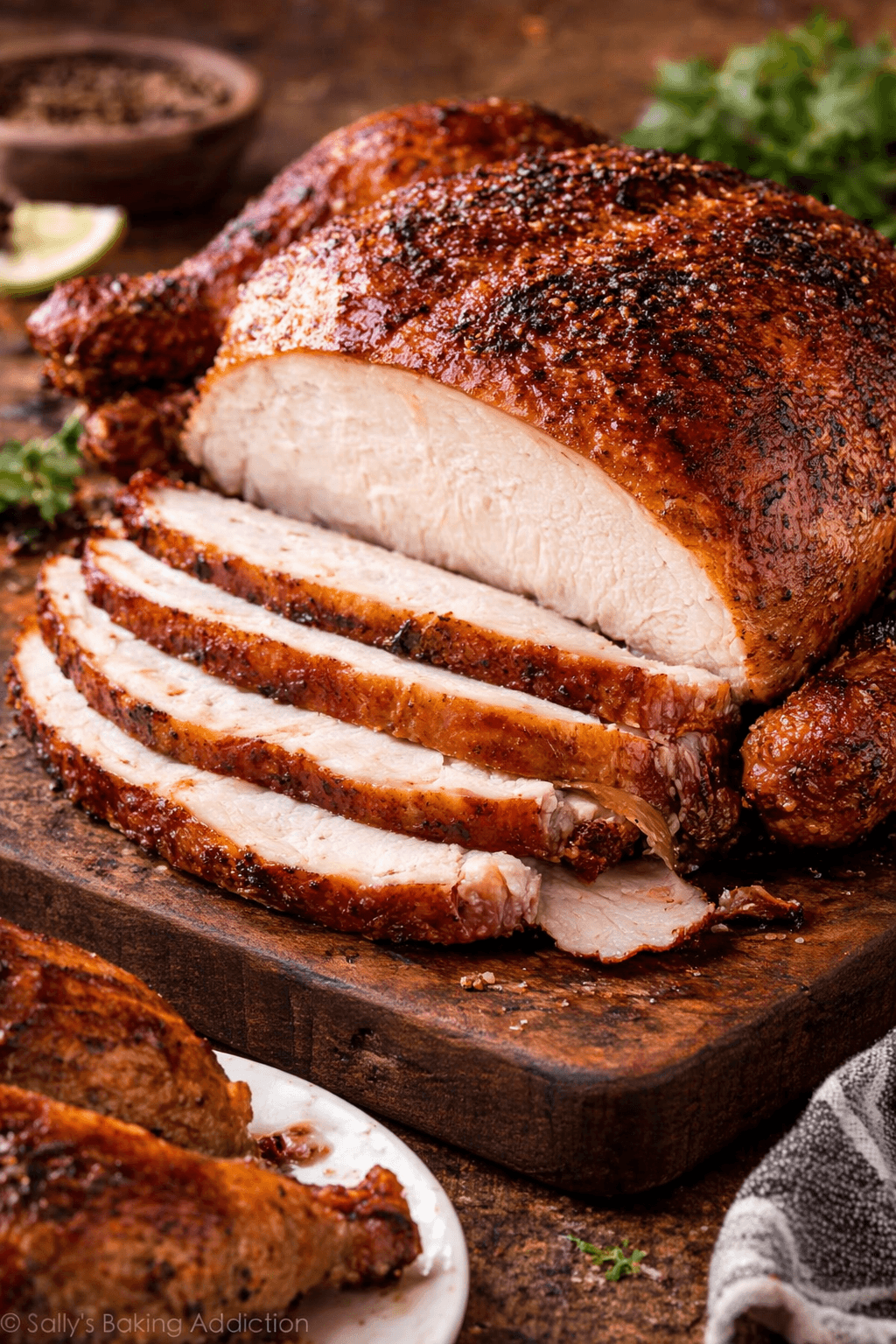
Houston Smoked Turkey
Houston Smoked Turkey is a staple of Texas barbecue culture. Unlike oven-roasted turkey, this version is slow-smoked over hardwood, producing deep flavor, juicy meat, and beautifully crisp skin.
In Houston BBQ joints, smoked turkey is often served alongside brisket and sausage, offering a lighter yet equally flavorful option.
Authentic Houston Smoked Turkey features:
-
Clean post oak smoke
-
Moist white and dark meat
-
Crisp, golden skin
-
Simple Texas seasoning
-
Balanced salt and pepper profile
The BBQ Philosophy Behind Houston Smoked Turkey
Texas barbecue focuses on simplicity and technique rather than heavy sauces. Houston Smoked Turkey follows the same philosophy — quality meat, proper seasoning, and controlled smoke.
Post oak is the traditional wood used in Houston and across Central Texas. It provides a mild, clean smoke that enhances the turkey without overpowering it.
Serious Eats explains how different woods affect smoked meats here:
https://www.seriouseats.com/best-wood-for-smoking-meat
Maintaining steady smoker temperature between 250°F and 275°F is essential. Fluctuating heat can dry out the breast meat.
The USDA safe internal temperature for turkey is 165°F in the breast and 175°F in the thigh. Official guidelines are available here:
https://www.fsis.usda.gov/food-safety/safe-food-handling-and-preparation/poultry
Ingredients
-
12–14 lb whole turkey (fully thawed)
-
2 tbsp kosher salt
-
1 tbsp coarse black pepper
-
1 tbsp garlic powder
-
1 tbsp paprika
-
½ cup melted butter
-
Post oak wood chunks
Where to Buy Ingredients in Houston
Whole Turkey
Available at:
-
H-E-B (Houston locations)
-
Kroger (Houston metro area)
-
Walmart (nationwide)
-
Central Market Houston
Post Oak Wood
Available at:
-
Academy Sports + Outdoors (Houston stores)
-
Home Depot Houston
-
Local BBQ supply stores
King Arthur Baking explains salt variations and their impact on seasoning here:
https://www.kingarthurbaking.com/blog/2020/07/29/types-of-salt
Step-by-Step Instructions
Step 1: Prepare Houston Smoked Turkey
Remove turkey from packaging.
Pat completely dry.
Air-dry in refrigerator 4–6 hours to promote crispy skin.
Step 2: Season
Brush turkey with melted butter.
Season generously with salt, pepper, garlic powder, and paprika.
Step 3: Prepare Smoker for Houston Smoked Turkey
Preheat smoker to 250°F.
Add post oak wood.
Maintain consistent airflow.
Step 4: Smoke
Place turkey breast side up.
Smoke until internal temperature reaches:
-
165°F (breast)
-
175°F (thigh)
This typically takes 3–4 hours depending on size.
Step 5: Rest
Rest turkey 30–45 minutes before carving.
This redistributes juices.
11 Professional Secrets for Houston Smoked Turkey
-
Dry skin before smoking.
-
Use post oak for authenticity.
-
Avoid heavy sugar rubs.
-
Maintain steady smoker temperature.
-
Use digital meat thermometer.
-
Don’t open smoker frequently.
-
Let turkey rest fully.
-
Carve against the grain.
-
Use quality kosher salt.
-
Avoid over-smoking.
-
Serve warm but not piping hot.
Texture Guide for Houston Smoked Turkey
Perfect Houston Smoked Turkey should be:
-
Juicy breast meat
-
Tender dark meat
-
Crisp skin
-
Light smoke ring
-
Balanced seasoning
Storage
Refrigerator: 4 days
Freezer: 2 months
Reheat gently to preserve moisture.
Nutritional Estimate (Per Serving)
-
Calories: 310
-
Protein: 40g
-
Fat: 14g
-
Carbs: 1g
The Smoking Technique That Defines Houston Smoked Turkey
Houston Smoked Turkey is all about mastering temperature control and smoke balance. In Texas barbecue culture, the goal is clean, steady smoke rather than heavy, overpowering flavor. Post oak is the traditional wood used across Houston because it burns evenly and produces a mild, slightly sweet smoke that enhances poultry without masking its natural taste.
Maintaining a smoker temperature between 250°F and 275°F allows the turkey to cook evenly while rendering fat slowly under the skin. This controlled heat prevents dryness in the breast meat while ensuring the dark meat becomes tender. Serious Eats explains how wood type influences flavor development in smoked meats here:
https://www.seriouseats.com/best-wood-for-smoking-meat
Airflow is equally important. Thin blue smoke is ideal, while thick white smoke can create bitterness. Keeping vents properly adjusted ensures clean combustion and balanced flavor in Houston Smoked Turkey.
Food Safety and Moisture Control in Houston Smoked Turkey
Because poultry is involved, proper internal temperature is critical. The breast should reach 165°F while the thighs reach approximately 175°F for optimal tenderness. Using a reliable digital thermometer eliminates guesswork. The USDA provides official poultry safety guidelines here:
https://www.fsis.usda.gov/food-safety/safe-food-handling-and-preparation/poultry
Moisture retention can be improved by air-drying the turkey in the refrigerator before smoking. This step helps the skin crisp while preserving interior juiciness. Lightly brushing melted butter over the skin enhances browning and texture.
Understanding salt selection also impacts seasoning depth. Kosher salt distributes more evenly across the surface. King Arthur Baking explains how salt types affect flavor here:
https://www.kingarthurbaking.com/blog/2020/07/29/types-of-salt
By combining proper wood choice, temperature control, and food safety practices, Houston Smoked Turkey achieves its signature juicy texture, crisp skin, and authentic Texas BBQ character.
Expert Tips to Elevate Your Recipe Results
Creating a truly memorable dish goes beyond simply following instructions. Small adjustments and thoughtful preparation can dramatically improve flavor, texture, and presentation. Whether you’re preparing a hearty dinner, a healthy meal, or a protein-packed specialty dish, mastering the fundamentals will help you achieve consistent, impressive results every time.
Start by selecting high-quality ingredients. Fresh herbs, premium proteins, seasonal vegetables, and unprocessed spices make a noticeable difference in taste. Whenever possible, choose whole ingredients over pre-packaged or heavily processed options. Fresh garlic instead of garlic powder, freshly squeezed citrus instead of bottled juice, and whole spices ground at home can significantly enhance depth of flavor.
Proper preparation is equally important. Allow proteins to rest at room temperature before cooking to ensure even heat distribution. Pat meats dry before searing to promote caramelization. When roasting vegetables, avoid overcrowding the pan so they brown instead of steam. These small technical details elevate the final dish from average to exceptional.
Understanding Flavor Balance
A well-balanced recipe includes five essential taste elements: saltiness, sweetness, acidity, bitterness, and umami. If a dish tastes flat, it often needs a touch of acid such as lemon juice or vinegar. If it tastes too sharp, a small amount of sweetness can round it out. Salt enhances all flavors, but it should be added gradually and adjusted at the end of cooking.
Umami-rich ingredients like mushrooms, aged cheeses, tomatoes, soy sauce, or slow-cooked meats create depth and richness. When thoughtfully combined, these elements transform simple ingredients into a satisfying, complex meal.
Layering flavor is another powerful technique. Instead of adding all seasonings at once, build them in stages. Season proteins before cooking, add aromatics during sautéing, and adjust seasoning after simmering. This approach creates depth rather than surface-level flavor.
Ingredient Substitutions and Variations
Flexibility in the kitchen allows you to adapt recipes to dietary preferences, ingredient availability, or nutritional goals. If you’re preparing a high-protein meal, consider swapping refined grains for quinoa, lentils, or legumes. For lower-carb options, replace traditional starches with cauliflower rice or zucchini noodles.
Healthy fats like olive oil, avocado oil, or grass-fed butter can be used depending on cooking temperature and flavor profile. If dairy is not suitable, plant-based alternatives such as coconut milk, almond milk, or nutritional yeast provide similar creaminess or savory notes.
For additional texture and visual appeal, incorporate fresh herbs, toasted nuts, or seeds before serving. These final touches elevate both presentation and taste.
Cooking Techniques That Improve Texture
Texture plays a major role in how satisfying a dish feels. Combining crispy, creamy, tender, and crunchy elements creates contrast and keeps every bite interesting. Searing meats over high heat develops a golden crust while preserving juiciness inside. Slow cooking breaks down tougher cuts into tender, flavorful pieces.
If baking, avoid overmixing batters to maintain softness. When grilling, preheat the surface thoroughly to prevent sticking and ensure proper grill marks. Resting cooked proteins for several minutes before slicing allows juices to redistribute, resulting in a moist final product.
Temperature control is crucial. Invest in a kitchen thermometer to ensure meats reach safe internal temperatures without overcooking. This simple tool dramatically improves consistency.
Nutritional Considerations
Balanced meals should include protein, healthy fats, fiber, and complex carbohydrates where appropriate. Protein supports muscle repair and satiety. Fiber aids digestion and promotes fullness. Healthy fats assist nutrient absorption and provide sustained energy.
Portion awareness also matters. Instead of focusing solely on calorie reduction, prioritize nutrient density. Meals rich in vitamins, minerals, and antioxidants support long-term health and overall well-being.
Hydration and mindful eating further enhance digestion and satisfaction. Taking time to enjoy each bite allows the body to register fullness and improves the overall dining experience.
Storage and Meal Prep Strategies
Proper storage extends freshness and prevents waste. Allow hot dishes to cool slightly before refrigerating in airtight containers. Most cooked meals remain fresh for three to four days when stored properly.
For meal prep, prepare ingredients in batches. Chop vegetables, marinate proteins, or cook grains in advance. This reduces weekday cooking time and helps maintain consistency with healthy eating habits.
Freezing is also an effective option for soups, stews, and cooked proteins. Label containers with dates to track freshness. When reheating, use gentle heat to prevent drying out the food.
Common Mistakes to Avoid
Overseasoning early in cooking can result in excessive saltiness as liquids reduce. Always taste and adjust gradually. Skipping resting time for meats causes juices to escape, leading to dryness.
Another common mistake is ignoring ingredient preparation instructions. Uniform chopping ensures even cooking. Cooking at incorrect temperatures may burn the exterior while leaving the interior undercooked.
Rushing the process often sacrifices flavor development. Allow sauces to simmer, let spices bloom in oil, and give baked goods time to set before slicing.
Presentation and Serving Suggestions
Visual appeal enhances perceived flavor. Use contrasting colors on the plate, garnish thoughtfully, and serve at appropriate temperatures. Fresh herbs, citrus zest, or a drizzle of high-quality oil add both aroma and elegance.
Pair dishes with complementary sides. Light salads balance rich proteins, while roasted vegetables provide depth to lean meals. Thoughtful plating transforms home cooking into a restaurant-quality experience.
Frequently Asked Questions
How can I make the dish more flavorful?
Focus on layering seasonings, incorporating acid, and using fresh herbs or spices. Taste throughout the cooking process and adjust gradually.
What’s the best way to prevent dryness?
Monitor cooking time carefully and allow proteins to rest before slicing. Avoid high heat for extended periods unless searing intentionally.
Can this recipe be adapted for special diets?
Yes, most recipes can be modified with ingredient substitutions such as plant-based alternatives, low-carb swaps, or gluten-free options.
How long can leftovers be stored?
Properly stored in airtight containers, most cooked meals last three to four days in the refrigerator.
What cooking tools improve results?
A sharp chef’s knife, cast iron skillet, kitchen thermometer, and quality baking sheets can significantly enhance consistency and texture.
By focusing on ingredient quality, technique, flavor balance, and thoughtful preparation, you can consistently create meals that are both nutritious and deeply satisfying. Mastering these fundamentals not only improves individual recipes but also strengthens overall cooking skills, allowing you to experiment confidently and adapt dishes to suit your preferences and dietary goals.
Internal Resource
For more Texas BBQ and American comfort recipes, stay connected for update new recipes at:
https://kickpromoted.com/
