
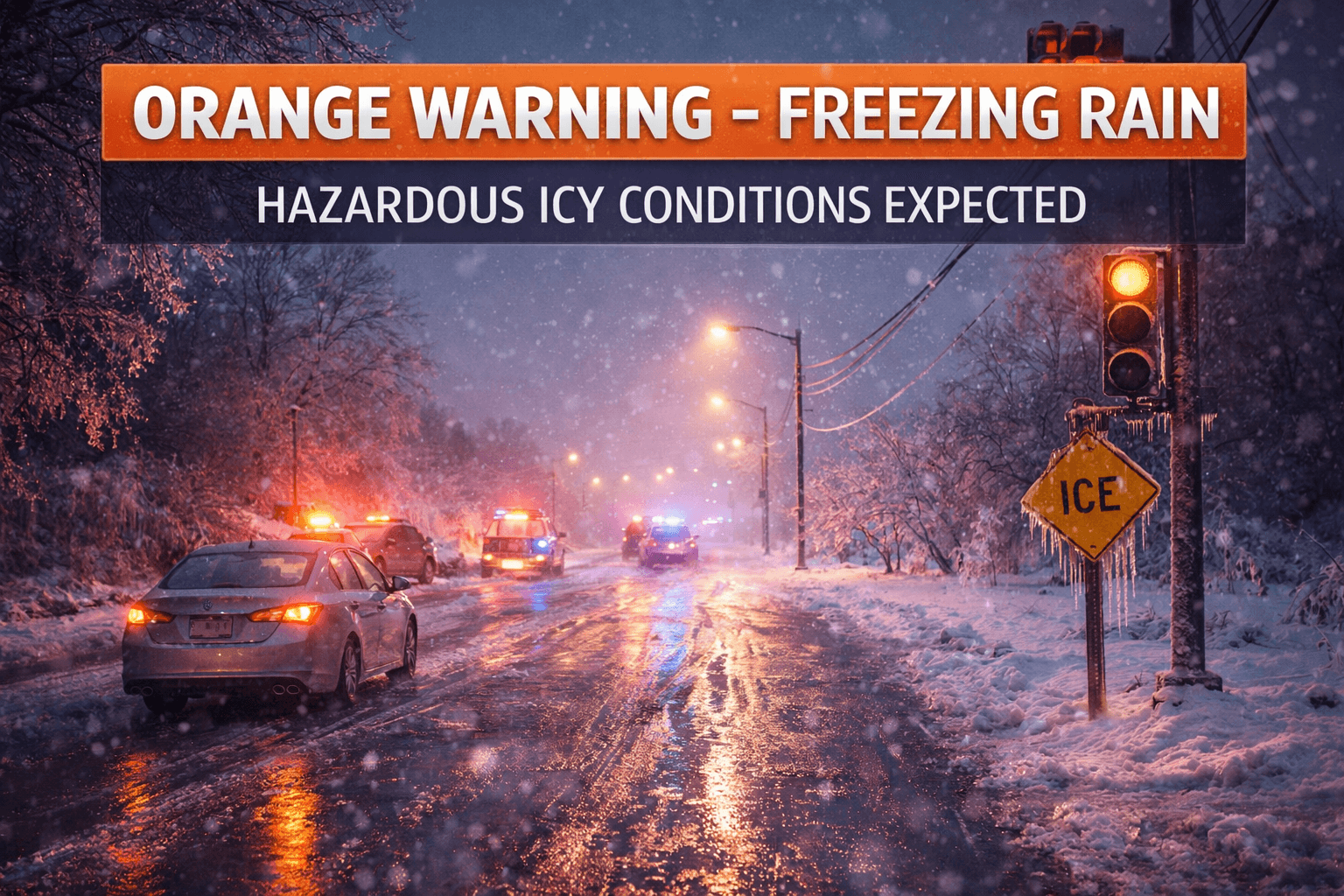
What Is an Orange Warning – Freezing Rain?
An Orange Warning – Freezing Rain is a serious weather alert issued by meteorological authorities to warn the public of potentially dangerous ice accumulation on roads, pavements, and surfaces. Freezing rain occurs when rain falls onto a surface that is below freezing, quickly forming a layer of ice that can cause accidents and disruptions.
The Orange Warning is the second-highest level in the standard weather warning system, meaning that conditions are dangerous and could affect daily life, including travel, school, and work. (Met Office)
Areas Affected by the Orange Warning – Freezing Rain
The current forecast identifies regions expected to experience freezing rain in the next 24–48 hours. Depending on your location, icy conditions may lead to:
-
Slippery roads and pavements
-
Hazardous walking conditions
-
Risk of vehicle accidents
-
Disruptions to public transport
Residents in northern states, highlands, and areas prone to frost are advised to monitor local weather updates continuously.
👉 Live regional forecasts: Weather.com
Safety Tips During the Orange Warning – Freezing Rain
To minimize risks during an Orange Warning for freezing rain:
Travel Precautions
-
Avoid unnecessary travel.
-
Use winter tires or chains if driving is unavoidable.
-
Maintain longer distances between vehicles.
Home Safety
-
Avoid walking on icy surfaces.
-
Keep emergency supplies, including food, water, and blankets.
-
Ensure heating systems are working and check for frozen pipes.
Outdoor Safety
-
Dress in warm, layered clothing.
-
Use salt or sand on paths to reduce slipperiness.
-
Check for falling ice or tree branches.
External reference: Red Cross – Winter Weather Safety
Expected Duration and Forecast Updates
Meteorologists predict the freezing rain event to continue for 12–36 hours, depending on temperature fluctuations and regional conditions. Weather updates may change rapidly, so staying tuned to official alerts is essential.
-
Monitor local meteorological services
-
Follow updates from government emergency channels (NOAA Winter Weather Alerts)
Impacts of Freezing Rain
Freezing rain can have serious consequences, including:
-
Transportation: Icy roads lead to accidents and delays on highways, railways, and airports.
-
Power outages: Ice accumulation on power lines and trees can disrupt electricity supply.
-
Health risks: Slips, falls, and hypothermia are major hazards for pedestrians.
Community and Government Response
Authorities typically respond to an Orange Warning – Freezing Rain by:
-
Deploying road salt and gritting trucks
-
Issuing travel advisories and closures
-
Coordinating emergency response for accidents and outages
-
Providing public guidance through official channels
👉 Check official government advisories here: UK Met Office Warnings
Conclusion – Stay Informed During the Orange Warning – Freezing Rain
The Orange Warning – Freezing Rain signals hazardous conditions that can affect travel, safety, and daily routines. Staying updated through trusted sources, preparing your home, and taking travel precautions are key to avoiding accidents and disruptions.
Understanding the Orange Warning – Freezing Rain
An Orange Warning – Freezing Rain is issued to alert the public about severe icy conditions that can affect travel, safety, and daily routines. Freezing rain occurs when precipitation falls through a layer of warm air and lands on surfaces that are below freezing, quickly forming a dangerous ice coating. This can make roads, pavements, and outdoor areas extremely slippery and increase the risk of accidents. Authorities emphasize that an orange warning signals a high likelihood of disruption, requiring immediate precautions to protect life and property. (Met Office)
Areas Most Affected
Regions experiencing the Orange Warning – Freezing Rain often include northern and elevated areas prone to frost or low temperatures. Local forecasts indicate that roads in these areas may be icy and hazardous, while public transport could face delays or cancellations. Residents are advised to stay updated through official weather channels and avoid unnecessary travel during peak icing conditions. (Weather.com)
Travel Precautions
To stay safe during an Orange Warning – Freezing Rain:
-
Avoid unnecessary travel whenever possible.
-
Use vehicles equipped with winter tires or chains.
-
Maintain longer stopping distances to avoid collisions.
-
Check public transport updates for delays or cancellations.
For up-to-date road and travel advisories, visit Traffic England.
Home and Outdoor Safety
Ice accumulation during freezing rain can affect homes and outdoor spaces. Tips include:
-
Keep emergency supplies such as food, water, blankets, and flashlights.
-
Ensure heating systems are functional and protect water pipes from freezing.
-
Wear layered clothing and non-slip shoes when going outside.
-
Use sand or salt to reduce slipperiness on driveways and walkways.
The Red Cross Winter Storm Guide provides detailed recommendations for staying safe at home during icy conditions.
Health Risks
The Orange Warning – Freezing Rain poses health hazards such as:
-
Slips and falls on icy roads and pavements.
-
Hypothermia from prolonged exposure to cold and wet weather.
-
Frostbite for those working or spending extended periods outdoors.
Experts recommend taking frequent breaks for outdoor workers, dressing in warm, waterproof layers, and checking in on vulnerable community members.
Community and Government Response
During an Orange Warning – Freezing Rain, authorities usually:
-
Deploy gritting trucks and spread salt on major roads.
-
Issue public alerts and travel advisories.
-
Provide emergency services for accidents or power outages.
-
Offer warming centers or shelters for residents without adequate heating.
Official updates and instructions are available via NOAA Winter Weather Alerts and local government channels.
Preparing for Delays and Disruptions
The freezing rain associated with this orange warning can disrupt daily life. Schools may close, businesses may adjust working hours, and essential services could face delays. Residents should:
-
Stock up on essential supplies in advance.
-
Allow extra travel time if commuting is necessary.
-
Monitor news channels for updates on road conditions and public advisories.
Being proactive reduces risks and ensures safety during severe winter weather.
Stay Connected for updates Kick Promoted.com
