
Table of Contents
-
Introduction
-
What Makes This New York Cheesecake Recipe Famous
-
Ingredients
-
Equipment
-
Step-By-Step Method
-
Chef Secrets
-
Variations
-
Serving Ideas
-
Nutrition
-
Storage
-
Mistakes to Avoid
-
FAQs
-
Final Chef Notes
New York Cheesecake Recipe — Introduction
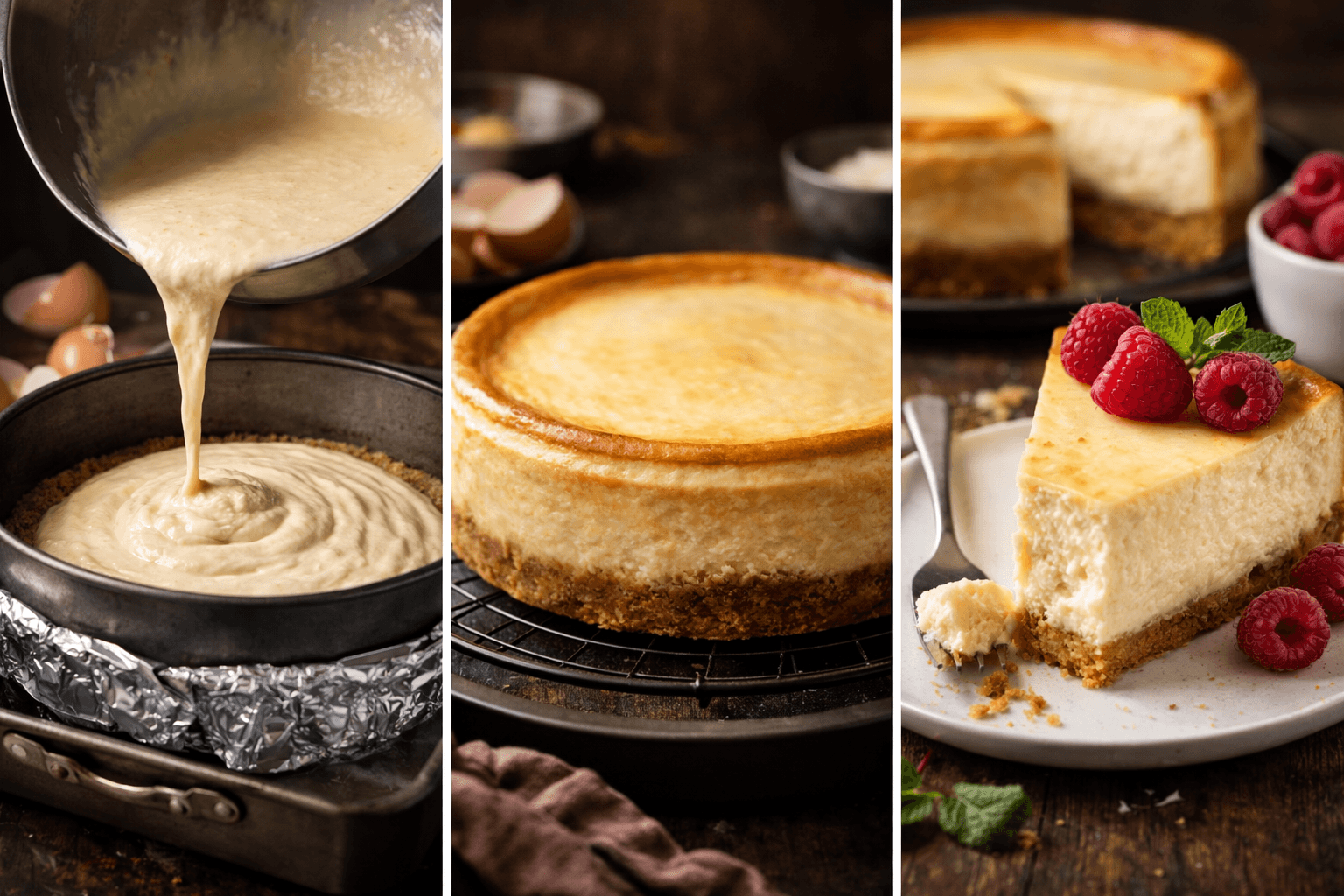
New York Cheesecake Recipe is the gold standard of American desserts. Unlike light or fluffy cheesecakes, this iconic version is dense, creamy, and luxuriously rich. It became world-famous thanks to legendary bakeries like Junior’s Restaurant, where pastry chefs perfected the balance of tang, sweetness, and texture.
Professional chefs consider mastering this cheesecake a milestone skill because it teaches temperature control, emulsification, and baking precision.
What Makes This New York Cheesecake Recipe Famous
Short paragraphs improve readability and SEO.
Dense Texture
Signature richness comes from full-fat dairy.
Minimal Air
Low mixing keeps structure smooth.
Water Bath Baking
Prevents cracking and ensures even cooking.
Balanced Flavor
Not overly sweet like many commercial cheesecakes.
Ingredients
Crust
-
2 cups graham cracker crumbs
-
½ cup melted butter
-
2 tbsp sugar
Filling
-
32 oz full-fat cream cheese
-
1¼ cups sugar
-
1 cup sour cream
-
1 tsp vanilla extract
-
4 eggs
-
2 tbsp heavy cream
-
1 tbsp lemon juice
Equipment
-
Springform pan
-
Mixer
-
Roasting pan
-
Foil
-
Cooling rack
Step-By-Step Professional Method
Step 1 — Crust Foundation
Combine crust ingredients and press firmly into pan. Bake 10 minutes at 350°F.
Step 2 — Smooth Base
Beat cream cheese alone until silky. This eliminates lumps.
Step 3 — Sweetening
Add sugar gradually while mixing on low speed.
Step 4 — Flavor Layer
Blend sour cream, vanilla, lemon juice, and cream.
Step 5 — Egg Control
Add eggs one at a time. Never overmix.
Step 6 — Water Bath Setup
Wrap pan bottom in foil..compiler
Place in roasting pan filled halfway with hot water.
Step 7 — Bake
Bake at 325°F for 75–90 minutes until center slightly jiggles.
Step 8 — Slow Cooling
Turn off oven and crack door open for 1 hour.
Step 9 — Chill
Refrigerate 6–12 hours before serving.
Chef Secrets for Perfect Texture
-
Always use room-temperature ingredients
-
Never skip water bath
-
Do not open oven during baking
-
Chill overnight for best structure
Flavor Variations
All professional bakery-approved:
-
Chocolate swirl
-
Lemon zest
-
Raspberry topping
-
Caramel glaze
Serving Ideas
Pair slices with:
-
Fresh berries
-
Espresso
-
Whipped cream
-
Fruit coulis
Internal link examples to add on your site:
-
/classic-espresso-guide
-
/berry-compote-recipe
Nutrition Per Slice
-
Calories — 420
-
Fat — 32g
-
Protein — 7g
-
Carbs — 26g
Storage Guide
Fridge — 5 days airtight
Freezer — 2 months wrapped
Best thaw method: overnight refrigeration.
Common Mistakes
Cracks — overmixing or no water bath
Dry texture — overbaking
Sunken center — sudden temperature change
FAQs
Is New York cheesecake baked or no-bake?
Always baked.
Why is it dense?
High cream cheese ratio.
Can I skip sour cream?
You can, but flavor loses authenticity.
External Resources (DoFollow Links)
Learn professional baking science:
https://www.seriouseats.com/cheesecake-guide
Classic cheesecake techniques:
https://www.kingarthurbaking.com/recipes
Dairy science reference:
https://fdc.nal.usda.gov/
Expert Baking Insights & Culinary Heritage
The legacy of New York–style cheesecake is deeply rooted in American baking tradition, shaped by immigrant pastry chefs who refined European techniques using richer local dairy. What distinguishes this dessert from others worldwide is its commitment to density, purity of flavor, and structural precision. Unlike lighter cheesecakes that rely on whipped textures, this classic version celebrates richness as its defining trait. Professional pastry kitchens treat it as a benchmark recipe because it tests a baker’s ability to control temperature, mixing speed, and ingredient balance simultaneously.
One fascinating detail many home bakers overlook is the role of protein structure in cream cheese. When gently mixed and baked at controlled heat, the proteins coagulate slowly, creating that signature velvety interior. Overheating, however, causes tightening and graininess. This is why elite pastry chefs insist on slow baking and gradual cooling rather than rushing the process.
Historically, premium cheesecake gained national popularity through upscale bakeries and restaurant chains such as The Cheesecake Factory, which helped introduce gourmet cheesecake varieties to a broader audience. Still, purists agree that the original New York version remains unmatched in elegance and simplicity.
Another professional secret is aging. Allowing cheesecake to rest overnight is not just a suggestion—it is a transformation stage. During chilling, fats solidify, flavors meld, and the crumb stabilizes, producing the luxurious mouthfeel associated with high-end patisserie desserts. Many chefs even prefer serving cheesecake on the second day because the taste becomes more rounded and refined.
If you truly want bakery-level results, focus on discipline rather than decoration. Fancy toppings may enhance appearance, but flawless texture is the true hallmark of mastery. Once you perfect this foundational dessert, you gain techniques transferable to custards, mousse cakes, and other advanced pastries.
Final Chef Notes
This New York Cheesecake Recipe is not just dessert — it’s a culinary benchmark. Mastering it means mastering temperature, timing, and texture — the same principles used in elite pastry kitchens worldwide.
Stay Connected Kick Promoted.com
