
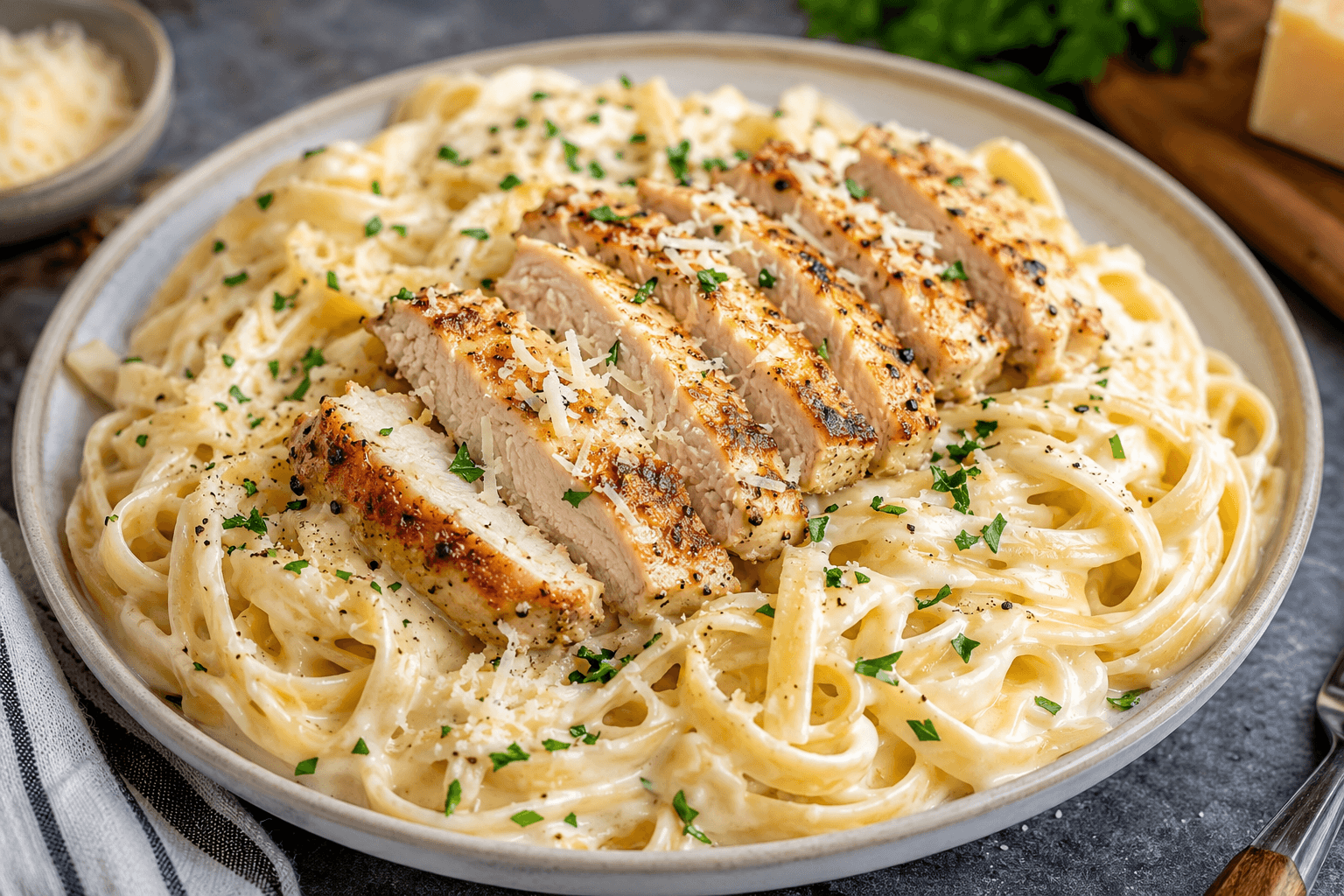
This Chicken Alfredo Recipe Is Pure Comfort in a Bowl
Creamy, rich, and loaded with tender chicken and perfectly cooked pasta, this easy Chicken Alfredo is the ultimate comfort food for busy weeknights and family dinners. Few pasta dishes hit the comfort-food sweet spot like Chicken Alfredo. The combination of juicy chicken, silky Parmesan cream sauce, and tender pasta creates a meal that feels indulgent yet approachable. The good news is that a truly satisfying Alfredo does not require restaurant techniques, exotic ingredients, or hours in the kitchen. With a handful of pantry staples and a few smart cooking choices, you can make a version that tastes rich and balanced without becoming heavy or greasy.

Why this Chicken Alfredo works
Many disappointing Alfredo recipes fail for the same reasons: overcooked chicken, broken sauce, bland seasoning, or pasta that sits too long before serving. This version focuses on four principles that keep the dish creamy and flavorful from the first bite to the last.
|
Key element |
What it does Pro Cooking Tips
|
|---|---|
|
Well-seasoned chicken |
Builds flavor before the sauce is even started. |
|
Freshly grated Parmesan |
Melts more smoothly than pre-shredded cheese. My Experience Making This RecipeAfter making this recipe a few times, I found that the overall result improves when you pay attention to small details like ingredient freshness and cooking order. This is the kind of recipe that becomes easier and more enjoyable each time you make it, especially once you understand how the flavors come together. |
|
Pasta water |
Helps the sauce cling to the noodles without becoming gluey. |
|
Gentle heat |
Keeps the cream and cheese emulsified instead of separating. Reader Tip / Cooking AdviceA helpful approach is to focus on texture as much as flavor. Watching how the ingredients look and feel during cooking can help you get a better final result. |
Ingredients
Serves 4–6.
|
Ingredient |
Amount |
|---|---|
|
Fettuccine or linguine |
12 oz (340 g) |
|
Boneless, skinless chicken breasts or thighs |
1½ lb (680 g) |
|
Salt |
1½ tsp, divided |
|
Black pepper |
1 tsp, divided |
|
Garlic powder |
1 tsp |
|
Olive oil |
1 tbsp |
|
Unsalted butter |
4 tbsp (56 g) |
|
Garlic, minced |
4 cloves |
|
Heavy cream |
1¾ cups (420 ml) |
|
Freshly grated Parmesan cheese |
1¼ cups (about 100–110 g) |
|
Pasta cooking water |
½–1 cup reserved |
|
Fresh parsley (optional) |
2 tbsp chopped |
Ingredient note: use freshly grated Parmesan
Pre-shredded cheese is often coated with anti-caking agents that make the sauce grainy. A wedge of Parmesan grated on a box grater or microplane melts much more smoothly.
Step-by-step method
1. Season and cook the chicken
-
Pat the chicken dry. This helps it brown instead of steam.
-
Season both sides with 1 tsp salt, ¾ tsp pepper, and the garlic powder.
-
Heat the olive oil in a large skillet over medium-high heat.
-
Cook the chicken until deeply golden and cooked through, about 5–7 minutes per side for breasts or 4–6 minutes per side for thighs, depending on thickness.
-
Transfer to a cutting board and rest for 5–10 minutes before slicing.
Why resting matters
Cutting immediately lets juices run out onto the board. A short rest keeps the chicken moist and gives you cleaner slices.
2. Boil the pasta
-
Bring a large pot of water to a rolling boil.
-
Salt it generously; the water should taste seasoned, not bland.
-
Cook the pasta until al dente, usually 1–2 minutes less than the package’s fully cooked time.
-
Before draining, reserve at least 1 cup of pasta water.
3. Build the Alfredo sauce
-
Reduce the skillet heat to medium. Add the butter and let it melt.
-
Stir in the minced garlic and cook for 30–60 seconds until fragrant. Do not brown it.
-
Pour in the heavy cream and bring it to a gentle simmer, not a vigorous boil.
-
Simmer for 2–3 minutes until slightly thickened.
-
Reduce the heat to low and gradually whisk in the Parmesan a handful at a time until smooth.
-
Season with the remaining ½ tsp salt and ¼ tsp pepper, tasting as you go. Parmesan is salty, so adjust carefully.
4. Combine everything
-
Add the drained pasta directly to the skillet.
-
Toss for 1–2 minutes, adding reserved pasta water a few tablespoons at a time until the sauce becomes glossy and coats the noodles evenly.
-
Return the sliced chicken to the pan and toss briefly to warm through.
-
Finish with parsley and an extra shower of Parmesan if desired.

The science of a silky Alfredo sauce
A good Alfredo sauce is an emulsion: fat from butter and cream suspended with water from the cream and pasta water. Parmesan contains proteins that help thicken the mixture. Problems arise when the heat is too high or the cheese is added too quickly.
To avoid grainy sauce: keep the sauce below a full boil once the cheese goes in, add Parmesan gradually while whisking, and use freshly grated cheese.
To avoid greasy sauce: do not let the cream boil hard, and add pasta water instead of extra butter when adjusting consistency.
To avoid a tight, gluey sauce: serve immediately. Alfredo thickens as it cools because the cheese proteins continue to set.
Choosing the best pasta
Fettuccine is classic because its broad ribbons hold the sauce well, but it is not the only option.
|
Pasta |
Texture and sauce-holding |
|---|---|
|
Fettuccine |
Traditional; excellent sauce coverage. |
|
Linguine |
Slightly narrower; still coats well. |
|
Tagliatelle |
Rich, luxurious texture. |
|
Spaghetti |
Works in a pinch but carries less sauce per bite. |
|
Penne or rigatoni |
Good for a baked Alfredo variation because sauce fills the tubes. |
Chicken breasts vs. thighs
|
Cut |
Pros |
Cons |
|---|---|---|
|
Breasts |
Lean, easy to slice, familiar texture. |
Can dry out if overcooked. |
|
Thighs |
More forgiving, richer flavor, stays juicy. |
Slightly higher fat content; irregular pieces. |
If you are feeding a crowd or reheating leftovers, thighs often stay juicier. If you prefer a lighter feel and neat slices, breasts are excellent when cooked carefully.
Make it even better: flavor upgrades
Garlic lovers
Increase the garlic to 6–8 cloves, but keep the heat moderate so it softens without browning.
Lemon Alfredo
Stir in 1–2 tsp finely grated lemon zest at the end. The citrus brightens the richness without making the sauce taste sour.
Cajun Chicken Alfredo
Season the chicken with 1–2 tsp Cajun seasoning instead of plain garlic powder and pepper. Taste the sauce before adding extra salt because Cajun blends vary widely.
Mushroom Alfredo
Sauté 8 oz sliced mushrooms after the chicken, then continue with the butter and garlic. Mushrooms add savory depth and stretch the meal.
Spinach Alfredo
Fold in 3–4 cups baby spinach during the final toss. The residual heat wilts it in under a minute.
Common mistakes and how to fix them
|
Problem |
Likely cause |
Fix |
|---|---|---|
|
Sauce is grainy |
Cheese added over high heat or pre-shredded cheese used. |
Lower heat; whisk in a splash of warm cream or pasta water; next time grate fresh Parmesan. |
|
Sauce is too thick |
Too much reduction or it sat too long. |
Add reserved pasta water a little at a time while tossing. |
|
Sauce is too thin |
Not enough reduction or too much water added. |
Simmer gently for 1–2 minutes before adding more cheese. |
|
Chicken is dry |
Overcooked or sliced immediately. |
Use an instant-read thermometer (165°F / 74°C) and rest before slicing. |
|
Dish tastes flat |
Under-salted pasta water or sauce. |
Season the boiling water and taste the sauce before serving. |
Make-ahead and storage
Can you make Chicken Alfredo ahead?
You can cook the chicken up to a day ahead and refrigerate it. The sauce itself is best made fresh because Alfredo thickens significantly as it sits.
Refrigerator
Store leftovers in an airtight container for up to 3 days.
Reheating
-
Add the pasta to a skillet with 2–4 tbsp milk, cream, or water.
-
Heat gently over low heat, tossing frequently.
-
Add more liquid as needed until the sauce loosens and turns glossy again.
Avoid blasting leftovers in the microwave on high power; that is the fastest route to oily, separated sauce.
Freezing
Cream-and-cheese sauces often become grainy after thawing. Freezing is not ideal if texture is a priority.

Serving ideas that balance the richness
Alfredo is naturally rich, so pairing it with lighter sides creates a more balanced meal.
|
Side |
Why it works |
|---|---|
|
Simple green salad with vinaigrette |
Acidity cuts through the cream. |
|
Roasted broccoli or asparagus |
Adds texture and freshness. |
|
Garlic bread |
Comfort-food classic for hearty appetites. |
|
Steamed green beans |
Light, crisp contrast. |
Nutrition snapshot (approximate)
Per serving, assuming 5 servings from the recipe and using chicken breast:
|
Component |
Approximate amount |
|---|---|
|
Calories |
750–900 |
|
Protein |
40–50 g |
|
Carbohydrates |
55–70 g |
|
Fat |
35–50 g |
These numbers vary with pasta brand, chicken cut, and cheese quantity. Alfredo is a treat meal for many households, so portion size matters more than chasing exact numbers.
Scaling the recipe
For 2 servings
Halve everything and use a 10–12 inch skillet.
For 8–10 servings
Use 2 lb pasta, 3 lb chicken, 3½ cups cream, and about 2½ cups grated Parmesan. Cook the sauce in a Dutch oven or large sauté pan so the pasta can be tossed thoroughly.
Restaurant-style finishing touches
If you want the bowl to look like it came from a trattoria, twirl the fettuccine into nests with tongs before plating, place sliced chicken on top instead of mixing it all through, finish with a light snowfall of Parmesan and a few parsley leaves, and add a crack of black pepper just before serving so the aroma hits immediately.
Frequently asked questions
Can I use milk instead of heavy cream?
You can, but the sauce will be thinner and more prone to separating. A better lighter option is half-and-half plus a little extra Parmesan and pasta water for body.
Is Alfredo supposed to contain cream?
Traditional Roman-style fettuccine Alfredo is essentially butter, Parmesan, and pasta water. The American restaurant version commonly includes cream, which is what most people expect from “Chicken Alfredo.” This recipe follows that creamy American style.
Can I use rotisserie chicken?
Yes. Skip the chicken-cooking step, shred or slice about 3–4 cups cooked chicken, and warm it in the sauce during the final toss.
Why reserve so much pasta water?
Starchy pasta water is your texture insurance policy. Different cheeses, creams, and pasta brands absorb liquid differently. Having extra water lets you adjust the sauce precisely instead of guessing.
Final thoughts
Chicken Alfredo earns its reputation as comfort food because it combines familiar flavors and luxurious texture in one bowl. The key to making it restaurant-worthy at home is not more butter or more cheese; it is temperature control, freshly grated Parmesan, properly cooked pasta, and a splash of pasta water added at the right moment. Master those four details and you get a silky sauce that clings to every strand, juicy chicken that stays tender, and a dish that feels indulgent without turning heavy.
Make it once as written, then customize it with mushrooms, spinach, lemon zest, or Cajun seasoning. The base technique remains the same, and that is what turns Chicken Alfredo from an occasional craving into a reliable, repeat-worthy dinner.
Final Thoughts
This dish works well because it is practical, easy to repeat, and full of flavor. Once you try it, it can easily become part of your regular cooking routine.
Feel free to make it your own by adjusting the details that matter most to you.