
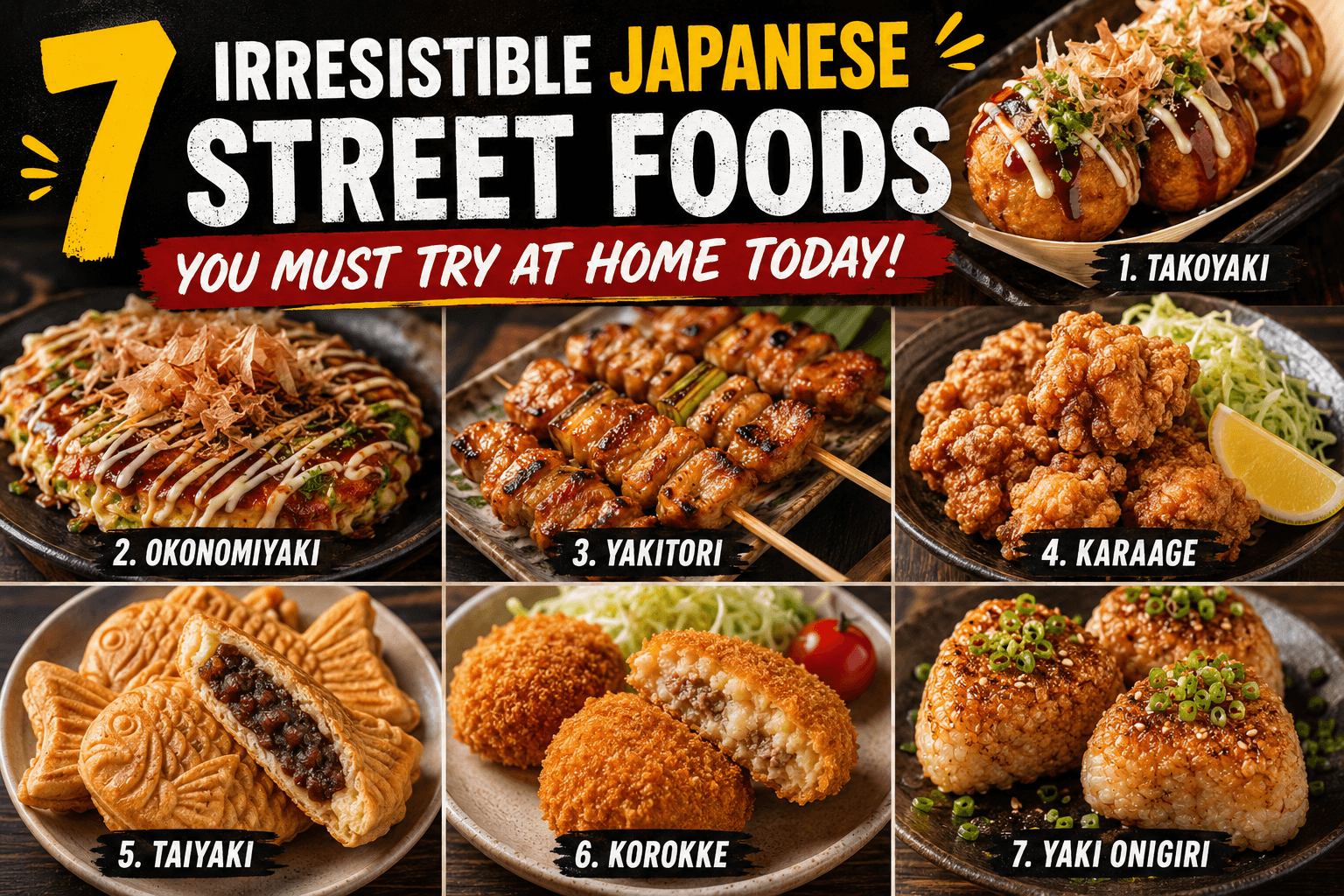
7 Irresistible Japanese Street Foods You Must Try at Home Today
Bring the Exciting Flavors of Japan to Your Kitchen
Japanese street food is famous worldwide for its incredible flavors, beautiful presentation, and comforting appeal. Whether you’ve wandered through the bustling streets of Tokyo, explored Osaka’s vibrant food markets, or simply watched travel shows featuring Japanese cuisine, you’ve likely dreamed of tasting these unforgettable dishes.
The good news is that you don’t have to book a flight to Japan to enjoy authentic street food. Many of Japan’s most beloved snacks and meals can be recreated right in your own kitchen using accessible ingredients and straightforward cooking techniques.
In this comprehensive guide, you’ll discover seven irresistible Japanese street foods that are surprisingly easy to prepare at home. Along the way, you’ll learn helpful cooking tips, ingredient substitutions, serving ideas, and common mistakes to avoid, ensuring your homemade creations taste as authentic as possible.
Why Japanese Street Food Is So Popular
Japanese street food has become increasingly popular because it combines simplicity with incredible flavor. Unlike many fast foods, Japanese street food focuses on fresh ingredients, balanced seasoning, and careful preparation.
Pro Cooking Tips
- Choose quality ingredients because simple recipes depend heavily on flavor.
- Follow the cooking order carefully so textures turn out right.
- Use the correct pan size to avoid overcrowding.
- Serve immediately if the recipe is best enjoyed warm and fresh.
Some reasons people love Japanese street food include:
- Fresh ingredients
- Balanced sweet and savory flavors
- Beautiful presentation
- Affordable meals
- Family-friendly recipes
- Endless variety
- Easy customization
Street food vendors across Japan often spend decades perfecting a single specialty, making each dish an unforgettable experience.
The Essential Pantry for Japanese Street Food
Before diving into the recipes, stock your pantry with these essentials.
H3 Japanese Seasonings
- Soy sauce
- Mirin
- Rice vinegar
- Miso paste
- Sesame oil
- Cooking sake
- Dashi powder
H3 Pantry Staples
- Japanese rice
- Panko breadcrumbs
- Flour
- Cornstarch
- Nori sheets
- Bonito flakes
- Pickled ginger
H3 Fresh Ingredients
- Green onions
- Cabbage
- Eggs
- Garlic
- Ginger
- Mushrooms
1. Takoyaki – Japan’s Famous Octopus Balls
Takoyaki originated in Osaka and has become one of Japan’s most iconic street foods.
My Experience Making This Recipe
After making this recipe a few times, I found that the overall result improves when you pay attention to small details like ingredient freshness and cooking order.
This is the kind of recipe that becomes easier and more enjoyable each time you make it, especially once you understand how the flavors come together.
These golden balls feature a crispy exterior and soft, creamy interior filled with tender octopus pieces.
Ingredients
- Flour
- Eggs
- Dashi stock
- Cooked octopus
- Green onions
- Pickled ginger
- Tempura scraps
Equipment Needed
A takoyaki pan is ideal, but a mini cake pop pan can work as an alternative.
Step-by-Step Instructions
Prepare the Batter
Mix flour, eggs, and dashi until smooth.
Heat the Pan
Brush generously with oil.
Reader Tip / Cooking Advice
A helpful approach is to focus on texture as much as flavor. Watching how the ingredients look and feel during cooking can help you get a better final result.
Fill Each Mold
Pour batter into each cavity.
Add Fillings
Add octopus, ginger, onions, and tempura bits.
Flip Carefully
Rotate each ball using skewers until evenly browned.
Serve
Top with:
- Takoyaki sauce
- Japanese mayonnaise
- Bonito flakes
- Seaweed flakes
Pro Tips
- Don’t overmix batter.
- Keep the pan hot.
- Oil generously.
2. Okonomiyaki – Japan’s Savory Pancake
Often called a Japanese pizza or savory pancake, Okonomiyaki literally means “grill what you like.”
Ingredients
- Cabbage
- Flour
- Eggs
- Dashi
- Pork belly
- Green onions
Cooking Instructions
Mix Batter
Combine flour and dashi.
Add Vegetables
Fold cabbage gently.
Cook Slowly
Cook until golden.
Flip carefully.
Finish cooking.
Toppings
- Okonomiyaki sauce
- Japanese mayonnaise
- Bonito flakes
- Seaweed powder
Delicious Variations
- Shrimp
- Cheese
- Bacon
- Mushrooms
- Kimchi
3. Yakitori – Grilled Chicken Skewers
Yakitori is one of Japan’s favorite evening snacks.
Tender grilled chicken brushed with sweet soy glaze creates unforgettable flavor.
Ingredients
- Chicken thighs
- Green onions
- Soy sauce
- Sugar
- Mirin
- Garlic
- Ginger
Marinade
Mix:
- Soy sauce
- Mirin
- Sugar
- Garlic
- Ginger
Marinate for 30 minutes.
Grilling
Alternate chicken and onions on skewers.
Grill until caramelized.
Brush sauce several times.
Best Side Dishes
- Rice
- Miso soup
- Pickled vegetables
4. Karaage – Japanese Fried Chicken
Karaage is known for its incredibly juicy interior and crispy coating.
Ingredients
- Chicken thighs
- Soy sauce
- Garlic
- Ginger
- Cornstarch
- Potato starch
Marinating
Marinate chicken for one hour.
Frying
Heat oil.
Fry twice.
Double frying creates exceptional crispiness.
Serving Suggestions
Serve with:
- Lemon wedges
- Japanese mayo
- Rice
- Salad
5. Taiyaki – Fish-Shaped Sweet Cakes
Taiyaki is one of Japan’s cutest desserts.
Traditional Filling
Sweet red bean paste.
Modern Fillings
- Nutella
- Custard
- Chocolate
- Sweet potato
- Matcha cream
Batter
A light pancake-style batter works perfectly.
Cook in a fish-shaped mold until golden.
6. Korokke – Japanese Croquettes
Japanese croquettes are crispy outside and creamy inside.
Ingredients
- Potatoes
- Ground beef
- Onion
- Panko breadcrumbs
Cooking Process
Mash potatoes.
Cook beef.
Mix together.
Shape patties.
Coat with flour, egg, and breadcrumbs.
Deep fry until golden.
Popular Fillings
- Crab
- Corn
- Curry
- Cheese
- Pumpkin
7. Yaki Onigiri – Grilled Rice Balls
Simple ingredients create incredible flavor.
Ingredients
- Cooked rice
- Soy sauce
- Sesame oil
Cooking
Shape rice firmly.
Grill until crispy.
Brush soy sauce.
Grill again.
Optional Fillings
- Tuna mayo
- Salmon
- Pickled plum
- Seaweed
Essential Japanese Sauces
Takoyaki Sauce
Sweet, tangy, rich.
Japanese Mayo
Creamier than regular mayonnaise.
Teriyaki Sauce
Perfect for grilled meats.
Ponzu
Refreshing citrus soy sauce.
Tips for Authentic Flavor
Use Japanese Rice
Short-grain rice creates the proper texture.
Don’t Rush Cooking
Many dishes rely on proper browning.
Balance Flavors
Japanese cooking emphasizes harmony.
Sweet, salty, savory, and umami should complement one another.
Common Mistakes to Avoid
Using Long Grain Rice
Japanese rice dishes require sticky short-grain rice.
Overcrowding the Fryer
Fry in batches.
Overmixing Batter
Creates dense pancakes.
Skipping Rest Time
Marinating enhances flavor.
Healthier Cooking Options
Instead of deep frying:
- Air fry
- Bake
- Grill
Use lean meats and plenty of vegetables.
Best Drinks to Pair
- Green tea
- Matcha latte
- Ramune soda
- Sparkling water
- Iced barley tea
Hosting a Japanese Street Food Night
Serve several dishes together.
Suggested menu:
- Takoyaki
- Yakitori
- Karaage
- Okonomiyaki
- Taiyaki
Decorate with simple Japanese-inspired tableware and let everyone sample a variety of flavors.
Storage Tips
Refrigeration
Most cooked dishes keep for 2–3 days in airtight containers.
Freezing
Korokke, karaage, and yakitori freeze well for up to two months.
Reheating
Use an oven or air fryer to restore crispiness instead of a microwave whenever possible.
Frequently Asked Questions
Can I Make Japanese Street Food Without Special Equipment?
Yes. While tools like a takoyaki pan or fish-shaped mold are helpful, many recipes can be adapted using standard kitchen equipment.
Alternatives
- Use a muffin pan for round bites.
- Grill skewers in a grill pan or under the broiler.
- Fry croquettes in a deep skillet.
Is Japanese Street Food Spicy?
Generally, no. Most dishes focus on umami, sweetness, and savory flavors. If you enjoy heat, add chili flakes, Japanese spice blends, or spicy mayonnaise.
Where Can I Buy Japanese Ingredients?
Many supermarkets carry soy sauce, panko, and sushi rice. Asian grocery stores and online retailers offer specialty ingredients like dashi, bonito flakes, Japanese mayonnaise, and takoyaki sauce.
Can These Recipes Be Made Vegetarian?
Absolutely. Replace meat or seafood with mushrooms, tofu, cheese, corn, sweet potato, or mixed vegetables. Vegetable broth can be used instead of dashi made with fish.
Expert Tips for Restaurant-Quality Results
Prep Everything Before Cooking
Street food cooks quickly, so measure and chop ingredients in advance.
Organize Your Workspace
- Prepare sauces first.
- Slice vegetables evenly.
- Keep cooking tools within reach.
Focus on Texture
Japanese street food is all about contrast.
- Crispy outside
- Tender inside
- Creamy fillings
- Fresh toppings
Getting the texture right often makes a bigger difference than adding extra seasonings.
Garnish Generously
Simple garnishes add both flavor and visual appeal.
Popular toppings include:
- Sliced green onions
- Toasted sesame seeds
- Bonito flakes
- Nori strips
- Pickled ginger
Bringing Japanese Street Food Into Everyday Meals
You don’t have to wait for a special occasion to enjoy these dishes. Many can become part of your weekly meal rotation.
Lunch Ideas
- Yaki onigiri with miso soup
- Karaage with shredded cabbage
- Korokke in a sandwich
Dinner Ideas
- Yakitori served over steamed rice
- Okonomiyaki with a fresh cucumber salad
- Takoyaki as an appetizer before ramen
Snack Ideas
- Taiyaki with tea
- Onigiri for packed lunches
- Leftover karaage with dipping sauce
Final Thoughts
Japanese street food captures the heart of Japan’s food culture with its perfect blend of simplicity, freshness, and unforgettable flavor. Whether you’re making crispy karaage, fluffy okonomiyaki, savory yakitori, or sweet taiyaki, each recipe offers a delicious way to experience authentic Japanese cuisine without leaving home.
Start with one recipe, master the techniques, and gradually expand your menu. Before long, you’ll be serving homemade Japanese street foods that rival your favorite restaurants and impress family and friends alike. With quality ingredients, a little patience, and the tips in this guide, you can recreate the excitement of Japan’s bustling food stalls right in your own kitchen.
Final Thoughts
This dish works well because it is practical, easy to repeat, and full of flavor. Once you try it, it can easily become part of your regular cooking routine.
Feel free to make it your own by adjusting the details that matter most to you.