
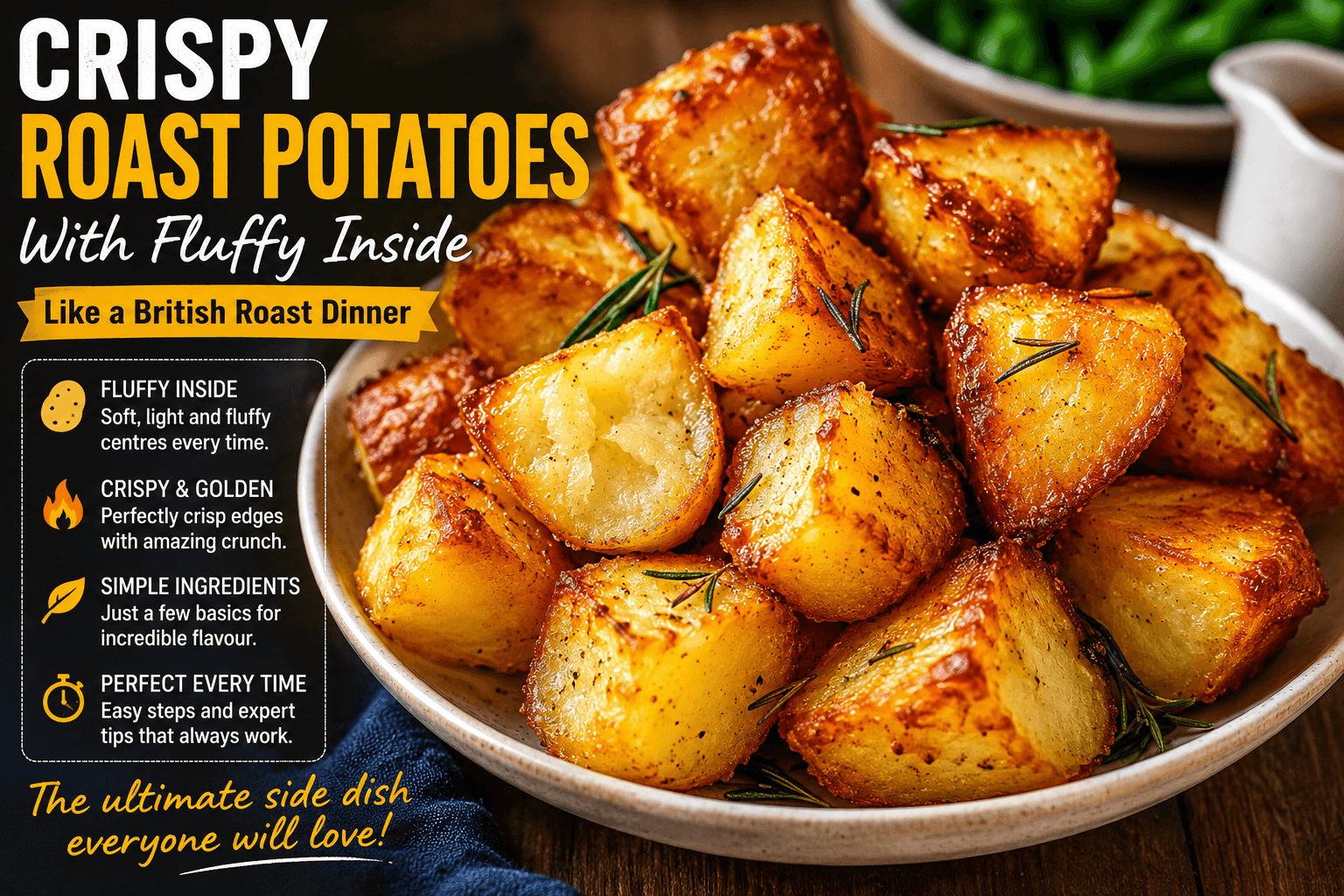
Crispy Roast Potatoes With Fluffy Inside Like a British Roast Dinner
Few dishes define British comfort food quite like perfectly cooked roast potatoes. Golden, crunchy on the outside, soft and fluffy on the inside—these are the potatoes that steal the show on any Sunday roast plate. Whether served with roast chicken, beef, lamb, or even a vegetarian gravy feast, crispy roast potatoes are the true hero of the meal.
Table of Contents
ToggleThis guide will show you exactly how to achieve that restaurant-quality texture at home every single time. No soggy edges, no undercooked centres—just perfect, golden roast potatoes with a satisfying crunch in every bite.
H2: What Makes Perfect British Roast Potatoes?
Perfect roast potatoes are all about contrast. You want:
- A crunchy, crisp outer shell
- A soft, fluffy, almost creamy inside
- Deep golden colour with slightly rough edges
- Rich flavour from fat, seasoning, and technique
H3: The Science Behind Crispy Roast Potatoes
The secret lies in starch transformation and surface roughening.
Pro Cooking Tips
- Read the full recipe once before starting to avoid mistakes.
- Cook patiently and do not rush the important steps.
- Watch for texture and aroma, not just the clock.
- Adjust the final flavor based on your own taste preferences.
When potatoes are boiled, the starch inside begins to loosen. If you shake them gently after boiling, the outer layer breaks slightly, creating a rough surface. This rough surface is what turns into that irresistible crisp coating when roasted in hot fat.
H4: Why British Roast Potatoes Are Different
British roast potatoes are traditionally cooked in:
- Beef dripping (for deep flavour)
- Goose fat (for luxury crispness)
- Or vegetable oil (for a lighter version)
Unlike simple baked potatoes, roast potatoes are partially boiled, then roasted at high heat, making them uniquely crispy.
H5: Key Texture Goal
The ideal roast potato should:
My Experience Making This Recipe
My own experience with this recipe showed me that simple meals can still feel special when they are prepared with care. The flavor was much better when I gave each step enough time.
I also noticed that serving the dish at the right moment made a difference, especially for texture and freshness.
- Crackle when you bite into it
- Hold its shape but remain light inside
- Absorb flavour without becoming greasy
H2: Ingredients You Need
Simple ingredients make the best roast potatoes. Quality matters more than quantity here.
H3: Core Ingredients
- 1.5 kg potatoes (Maris Piper or King Edward preferred)
- 4–5 tbsp goose fat, beef dripping, or vegetable oil
- 1–2 tsp salt
- Freshly ground black pepper
H4: Best Potatoes to Use
Maris Piper
- Most popular choice in the UK
- High starch = fluffy interior
- Crisps beautifully in the oven
King Edward
- Slightly floury texture
- Slightly softer crisp but excellent flavour
Avoid Waxy Potatoes
Waxy varieties like Charlotte or new potatoes stay firm and don’t fluff up properly.
H5: Optional Flavour Enhancers
- Garlic cloves (crushed, roasted with potatoes)
- Rosemary sprigs
- Thyme
- Paprika for colour
- Duck fat for extra richness
H2: Step-by-Step Method for Crispy Roast Potatoes
Follow this method carefully—timing and technique matter as much as ingredients.
H3: Step 1 – Peel and Chop
Peel the potatoes and cut them into even-sized chunks.
Reader Tip / Cooking Advice
Always taste when possible before serving. A small final adjustment in seasoning or cooking time can improve the dish more than expected.
H4: Size Matters
- Too small → burn quickly
- Too large → uneven cooking
Ideal size: medium chunks (about golf ball size)
H3: Step 2 – Parboil the Potatoes
Place potatoes in cold salted water and bring to a boil.
H4: Why Start in Cold Water?
Starting cold ensures:
- Even cooking throughout
- No raw centre
- Better starch release
H4: Boil Time
- 8–12 minutes depending on size
- Potatoes should be soft on the outside but not falling apart
H5: The Shake Trick (Very Important)
After draining:
- Put potatoes back in the pot
- Shake gently to roughen edges
This creates a starchy, textured surface that becomes ultra crispy in the oven.
H3: Step 3 – Preheat the Fat
This step is what separates average potatoes from amazing ones.
H4: Oven Temperature
- Preheat oven to 220°C (200°C fan)
H4: Heating the Tray
Add fat to a roasting tray and heat it in the oven until:
- It’s shimmering hot
- Almost smoking slightly
H5: Why Hot Fat Matters
Hot fat:
- Seals the surface instantly
- Prevents sticking
- Creates immediate crisping
H3: Step 4 – Roast the Potatoes
Carefully add potatoes to hot fat.
H4: Coating the Potatoes
Turn them gently so each piece is coated evenly.
H4: Roasting Time
- 40–60 minutes total
Turn every 20 minutes for even browning.
H3: Step 5 – Final Crisping
For extra crunch:
- Increase heat to 230°C for last 10 minutes
- Or place under grill for 2–3 minutes
H4: Watch Closely
They can go from golden to burnt quickly at this stage.
H2: Expert Tips for Perfect Roast Potatoes
Even small changes can dramatically improve results.
H3: Tip 1 – Dry Potatoes Are Better
After boiling:
- Let steam evaporate
- Wet potatoes = soggy roast potatoes
H3: Tip 2 – Don’t Crowd the Tray
H4: Why Spacing Matters
Crowding causes:
- Steaming instead of roasting
- Less crisp surface
- Uneven colour
Give each potato space to breathe.
H3: Tip 3 – Use the Right Fat
H4: Best Options Ranked
- Goose fat (crispiest, richest flavour)
- Beef dripping (traditional and deep flavour)
- Duck fat (luxury taste)
- Vegetable oil (lighter option)
H3: Tip 4 – Season Twice
H4: Before Roasting
Add salt for base flavour.
H4: After Roasting
Sprinkle finishing salt for extra crunch and taste.
H3: Tip 5 – Add Herbs at the Right Time
- Add rosemary in last 15 minutes
- Garlic goes in halfway through
- Fresh herbs burn if added too early
H2: Common Mistakes to Avoid
Even experienced cooks make these errors.
H3: Mistake 1 – Skipping Parboiling
Without parboiling:
- No fluffy interior
- No crisp edges
- Just baked potatoes
H3: Mistake 2 – Using Cold Oil
Cold oil leads to:
- Greasy potatoes
- Soft texture
- Poor browning
H3: Mistake 3 – Overturning Too Often
Too much movement breaks potatoes and prevents crust formation.
H3: Mistake 4 – Wrong Potato Type
Waxy potatoes will never give you proper fluffiness.
H2: Serving Ideas for Roast Potatoes
These potatoes are versatile and pair with almost anything.
H3: Classic British Roast Dinner
Serve with:
- Roast chicken
- Beef or lamb
- Gravy
- Yorkshire puddings
- Seasonal vegetables
H3: Everyday Comfort Meals
They also go well with:
- Fried eggs and beans
- Grilled sausages
- Chicken burgers
- Steak and salad
H3: Party or Buffet Food
- Serve with dips like garlic mayo
- Pair with BBQ dishes
- Add as crispy side bites
H2: Variations of Roast Potatoes
Once you master the basic recipe, try these upgrades.
H3: Garlic Herb Roast Potatoes
Add:
- Garlic cloves
- Rosemary
- Thyme
Result: aromatic, restaurant-style potatoes.
H3: Spicy Roast Potatoes
Add:
- Paprika
- Chili flakes
- Black pepper
Perfect for bold flavour lovers.
H3: Cheesy Roast Potatoes
In final 10 minutes:
- Sprinkle cheddar cheese
- Add spring onions
Melted, crispy, indulgent finish.
H2: Storage and Reheating
Roast potatoes are best fresh, but leftovers can still be great.
H3: Storage Tips
- Store in airtight container
- Refrigerate for up to 3 days
H3: Reheating Methods
H4: Oven (Best Method)
- 200°C for 10–15 minutes
H4: Air Fryer
- 180°C for 5–8 minutes
H4: Avoid Microwave
- Makes them soft and soggy
H2: Why This Recipe Works Every Time
This method guarantees success because it focuses on:
- Starch activation through boiling
- Surface roughening for crispness
- High heat roasting
- Proper fat usage
- Controlled moisture removal
Each step builds layers of texture until the final result is perfect golden roast potatoes.
H2: Final Thoughts
Crispy roast potatoes are more than just a side dish—they’re the heart of a British roast dinner. When done properly, they deliver the perfect balance of crunch and softness that keeps everyone reaching for seconds.
Once you master this method, you’ll never go back to basic baked potatoes again. Whether it’s a Sunday roast, a holiday meal, or a simple dinner at home, these potatoes will always steal the spotlight.
H2: Advanced Techniques for Next-Level Crispy Roast Potatoes
If you already know the basics, this is where your roast potatoes go from “really good” to “pub-quality or better.” These techniques are used in professional kitchens and traditional British roasts.
H3: Double-Cooking Method (Extra Crisp Layer)
One of the most powerful upgrades is the double-cook method.
H4: How It Works
Instead of roasting once, you:
- Parboil and rough up the potatoes
- Roast until lightly golden
- Cool them slightly
- Roast again at high heat
H4: Why It Works
- First roast builds structure
- Second roast creates deep crunch layers
- Exterior becomes extra blistered and crisp
H5: Result
You get a glass-like crispy shell with an ultra-soft interior.
H3: Flour Dusting Trick (Secret Crunch Booster)
A traditional trick used in some British kitchens.
H4: Method
After shaking boiled potatoes:
- Sprinkle 1–2 tsp plain flour over them
- Toss gently to coat
H4: Effect
- Creates a micro-crust layer
- Enhances browning
- Adds extra crunch without changing flavor much
H3: Baking Soda Method (Pro-Level Hack)
This is a modern chef technique for extreme crispiness.
H4: How to Use It
Add a small pinch of baking soda to boiling water.
H4: What It Does
- Breaks down potato surface slightly
- Increases rough texture
- Helps starch gel form crisp coating
H5: Warning
Use very little—too much will affect taste.
H3: Steam-Dry Technique (Game Changer)
After boiling and draining:
H4: Steps
- Leave potatoes in colander
- Place them back in hot pot
- Let steam evaporate for 5–10 minutes
H4: Why It Matters
Dry surface = maximum crispiness
Wet surface = steaming instead of roasting
H2: Choosing the Right Fat for Maximum Flavor
Fat is not just cooking medium—it defines taste.
H3: Goose Fat (Traditional King of Roast Potatoes)
H4: Why It’s Special
- High smoke point
- Rich, savoury flavour
- Creates deep golden crust
H4: Best Use
Sunday roasts, festive meals, Christmas dinners
H3: Beef Dripping (Old-School British Taste)
H4: Flavor Profile
- Deep, meaty aroma
- Very traditional pub-style taste
H4: Best Pairing
- Roast beef
- Yorkshire puddings
- Onion gravy
H3: Vegetable Oil (Light Everyday Option)
H4: Pros
- Neutral flavour
- Widely available
- Budget friendly
H4: Cons
- Less rich flavour
- Slightly less crisp than animal fats
H3: Butter + Oil Combination (Balanced Option)
H4: Why Mix?
- Butter gives flavour
- Oil prevents burning
H4: Ratio
- 70% oil
- 30% butter
H2: Texture Mastery – Understanding Potato Structure
To master roast potatoes, you need to understand what’s happening inside.
H3: Starch Gelatinization
When potatoes boil:
H4: Process
- Starch absorbs water
- Cells soften and expand
- Interior becomes fluffy
H3: Surface Dehydration
During roasting:
H4: Process
- Water evaporates from outer layer
- Surface hardens
- Crunchy crust forms
H3: Maillard Reaction (Golden Browning)
This is where magic happens.
H4: What It Is
A reaction between:
- Amino acids
- Natural sugars
H4: Result
- Golden-brown colour
- Deep roasted flavour
- Crisp texture
H2: Troubleshooting Roast Potato Problems
Even experienced cooks face issues. Here’s how to fix them.
H3: Problem: Potatoes Are Soggy
H4: Causes
- Too much moisture
- Oven not hot enough
- Overcrowded tray
H4: Fix
- Dry potatoes properly
- Increase oven temperature
- Spread evenly
H3: Problem: Not Crispy Enough
H4: Causes
- Wrong potato type
- Cold fat
- Skipped parboiling
H4: Fix
- Use Maris Piper
- Preheat oil
- Always parboil
H3: Problem: Burnt Outside, Raw Inside
H4: Causes
- Heat too high too early
- Large uneven chunks
H4: Fix
- Lower temp slightly
- Cut potatoes evenly
H3: Problem: Bland Taste
H4: Causes
- Under-seasoning
- No finishing salt
H4: Fix
- Season in layers
- Add herbs or garlic
H2: Restaurant Secrets for Perfect Roast Potatoes
These are used in professional kitchens across the UK.
H3: Pre-Roast Resting Technique
H4: Method
Let parboiled potatoes sit for 10–15 minutes before roasting.
H4: Benefit
- Stronger crust formation
- Better texture contrast
H3: Roasting on a Wire Rack
H4: Why It Works
- Air circulates underneath
- No soggy bottom
- Even browning
H3: High-Heat Finish Blast
H4: Method
Last 5–10 minutes at max oven temperature.
H4: Result
- Extra crunch
- Deep golden colour
H2: Flavour Pairing Ideas
Roast potatoes work best with strong, rich dishes.
H3: Classic Pairings
- Roast chicken with gravy
- Beef roast with horseradish
- Lamb with mint sauce
H3: Modern Pairings
- Garlic butter steak
- Crispy fried fish
- Grilled halloumi and vegetables
H3: Comfort Food Combos
- Beans and fried eggs
- Sausage and onion gravy
- Mac and cheese side plates
H2: Seasonal Roast Potato Ideas
Change your seasoning depending on season for variety.
H3: Winter Style
- Rosemary
- Garlic
- Thyme
- Extra gravy focus
H3: Summer Style
- Lemon zest
- Parsley
- Light seasoning
H3: Festive Style (Christmas Roast)
- Goose fat
- Sage
- Cracked black pepper
- Crispy edges maximized
H2: Why People Love British Roast Potatoes
It’s not just food—it’s tradition.
H3: Emotional Connection
- Family Sunday meals
- Holiday gatherings
- Pub dinners
H3: Sensory Appeal
- Crunch sound when biting
- Soft fluffy interior
- Rich roasted aroma
H3: Universal Comfort
No matter age or background, roast potatoes feel like home food.
H2: Final Master Tip
If you remember only one thing:
H3: “Hot fat + dry surface + rough edges = perfect roast potatoes”
That simple formula is the foundation of everything.
Final Thoughts
If you are looking for a recipe that is both approachable and satisfying, this one is worth trying. Paying attention to the basics can help you get consistently good results.
Enjoy it fresh and adapt it over time as you learn what works best in your kitchen.