
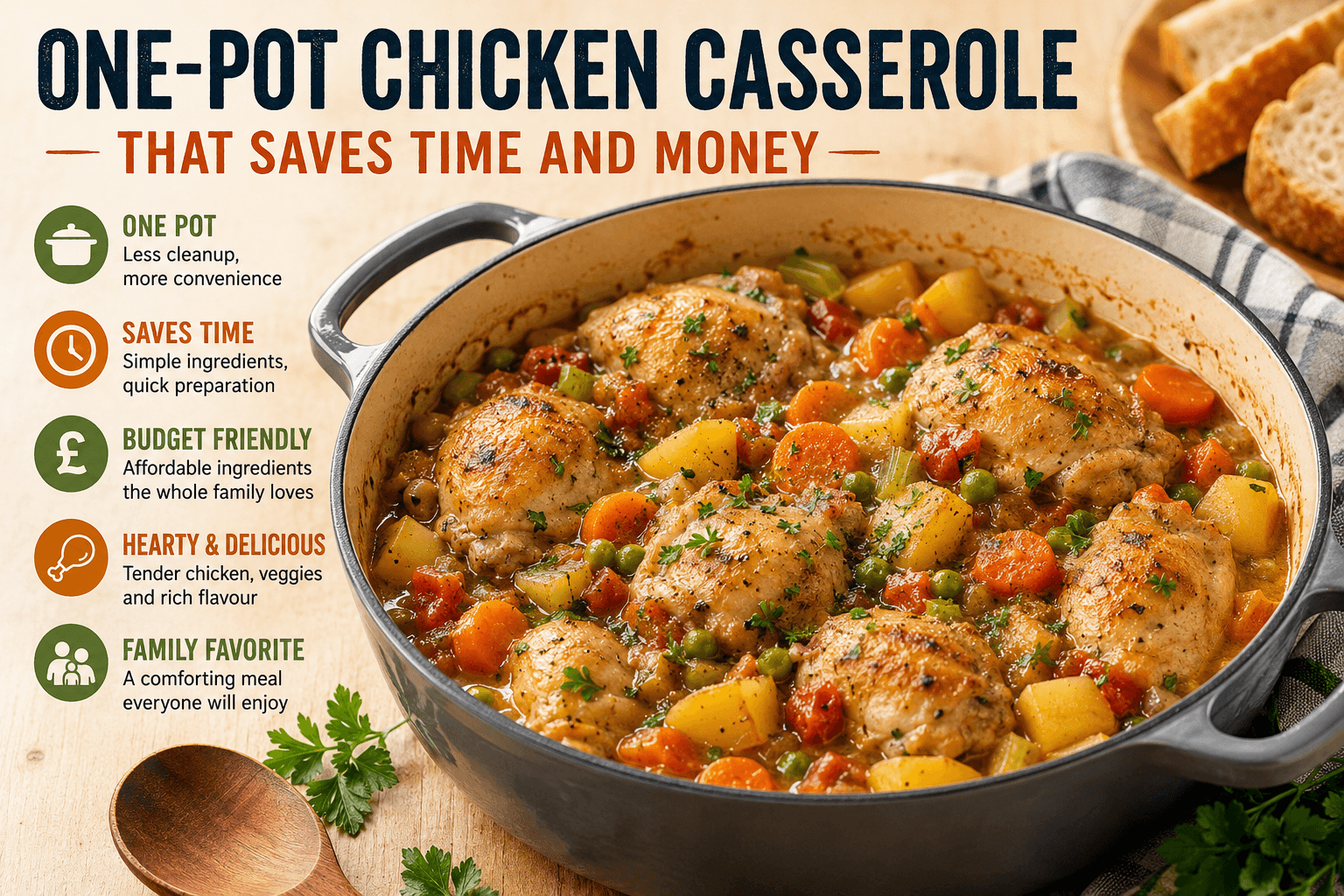
7 Powerful Reasons This One-Pot Chicken Casserole Saves Time and Money
A Hearty, Budget-Friendly British Comfort Food That Delivers Rich Flavour and Minimal Cleanup
There is something undeniably comforting about a warm chicken casserole simmering away on the stove or baking in the oven. The aroma of tender chicken, hearty vegetables, and rich herbs filling the kitchen instantly creates a sense of home. For generations, casseroles have been a staple in British households because they are affordable, nourishing, and easy to prepare.
Table of Contents
ToggleThis One-Pot Chicken Casserole takes everything people love about traditional comfort food and makes it even more practical. By cooking everything in a single pot, you save time, reduce washing up, and allow the ingredients to develop deep, satisfying flavours together.
Whether you’re preparing a family dinner, looking for a meal-prep solution, or simply trying to stretch your grocery budget, this recipe offers the perfect balance of convenience and taste.
H2: What Is a One-Pot Chicken Casserole?
A one-pot chicken casserole is a complete meal made by slowly cooking chicken, vegetables, stock, and seasonings together in a single cooking vessel.
Pro Cooking Tips
- Use fresh ingredients for the best flavor and texture.
- Cook on medium heat so the dish cooks evenly without burning.
- Taste before serving and adjust seasoning if needed.
- Serve the recipe fresh for the best overall result.
Unlike complicated recipes that require multiple pans and cooking methods, a one-pot casserole keeps everything simple while maximizing flavour.
The ingredients gently cook together, creating a rich sauce that coats every bite.
H3: Why One-Pot Meals Are So Popular
One-pot meals continue to grow in popularity because they:
- Save time
- Reduce cleanup
- Require fewer kitchen tools
- Allow flavours to develop naturally
- Are perfect for batch cooking
- Help reduce food waste
Busy families appreciate the convenience while still enjoying a homemade meal.
My Experience Making This Recipe
When I first made this recipe, I noticed that simple steps and proper timing made the biggest difference in the final taste. Taking a little extra care with the cooking process helped bring out better flavor and texture.
After trying this recipe more than once, I found that using fresh ingredients and not rushing the steps gives the best results. Small adjustments during cooking can make the dish taste even better.
H3: The Comfort Food Factor
Chicken casserole has long been associated with warmth and comfort.
The combination of tender meat, soft vegetables, and savoury gravy creates a meal that feels satisfying and nourishing.
It’s the kind of dish that works equally well on a cold winter evening or as a hearty weekend dinner.
H2: Ingredients You’ll Need
The beauty of this casserole lies in its simplicity.
Reader Tip / Cooking Advice
For the best result, prepare everything before cooking and keep an eye on timing. Small details like heat level, texture, and seasoning balance can make a big difference in the final dish.
H3: Main Ingredients
H4: Chicken
- 800g chicken thighs or chicken breast
- Cut into bite-sized pieces
Chicken thighs are often preferred because they remain juicy during long cooking times.
H4: Potatoes
- 500g potatoes
- Peeled and diced
Potatoes add heartiness and help thicken the casserole naturally.
H4: Carrots
- 2 large carrots
- Sliced into rounds
Carrots bring sweetness and colour.
H4: Onion
- 1 large onion
- Finely chopped
Onions create the flavour base for the dish.
H4: Celery
- 2 celery stalks
- Chopped
Celery adds depth and balance.
H3: Liquids and Seasonings
H4: Chicken Stock
- 750ml chicken stock
The stock forms the base of the rich sauce.
H4: Tomato Paste
- 1 tablespoon
Adds subtle richness.
H4: Garlic
- 3 cloves minced
Provides aromatic flavour.
H4: Herbs
- Thyme
- Rosemary
- Parsley
These classic herbs pair perfectly with chicken.
H4: Salt and Pepper
Season according to taste.
H2: Kitchen Equipment Required
You don’t need fancy equipment.
H3: Essential Tools
H4: Large Dutch Oven or Casserole Pot
A heavy-bottomed pot ensures even cooking.
H4: Wooden Spoon
Perfect for stirring without damaging cookware.
H4: Sharp Knife
Makes vegetable preparation easier.
H4: Chopping Board
Essential for safe food preparation.
H2: Step-by-Step Cooking Instructions
H3: Step 1 – Prepare Ingredients
Wash, peel, and chop all vegetables before starting.
This preparation makes the cooking process smoother.
H4: Pro Tip
Keep ingredient sizes uniform to ensure even cooking.
H3: Step 2 – Brown the Chicken
Heat a tablespoon of oil in your casserole pot.
Add chicken pieces and cook until lightly browned.
H4: Why Browning Matters
Browning creates caramelization which adds significant flavour.
Remove chicken and set aside.
H3: Step 3 – Cook the Vegetables
Add onions, carrots, and celery to the same pot.
Cook for 5–7 minutes.
H4: Building Flavour
The vegetables absorb the flavour left behind by the chicken.
Add garlic and cook for another minute.
H3: Step 4 – Create the Sauce
Stir in tomato paste.
Slowly pour in chicken stock.
Mix thoroughly.
H4: Important Tip
Scrape the bottom of the pot to release browned bits.
These bits contain concentrated flavour.
H3: Step 5 – Combine Everything
Return the chicken to the pot.
Add potatoes and herbs.
Season with salt and pepper.
Stir gently.
H3: Step 6 – Simmer Slowly
Bring the casserole to a gentle boil.
Reduce heat and cover.
Cook for approximately 45–60 minutes.
H4: Why Slow Cooking Works
Slow cooking allows:
- Chicken to become tender
- Potatoes to soften
- Flavours to blend
- Sauce to thicken naturally
H3: Step 7 – Final Taste Test
Before serving, taste and adjust seasoning.
Add extra herbs if desired.
H2: Tips for the Best One-Pot Chicken Casserole
H3: Choose Quality Chicken
Fresh chicken delivers better flavour and texture.
H4: Chicken Thighs vs Chicken Breast
Chicken Thighs
Pros:
- Juicier
- More flavourful
- Less likely to dry out
Chicken Breast
Pros:
- Leaner
- Higher protein content
- Lower fat
Both options work well.
H3: Don’t Rush the Process
Slow cooking develops deeper flavours.
H4: Patience Pays Off
Allow enough time for ingredients to soften naturally.
H3: Use Fresh Herbs
Fresh herbs provide brighter flavours.
H4: Recommended Combinations
- Thyme and rosemary
- Parsley and thyme
- Rosemary and sage
H2: Budget-Friendly Benefits
One reason this casserole remains popular is affordability.
H3: Inexpensive Ingredients
Most ingredients are affordable year-round.
Examples include:
- Potatoes
- Carrots
- Onions
- Chicken thighs
These staples offer excellent value.
H3: Reduces Food Waste
Many leftover vegetables can be added.
H4: Great Additions
- Peas
- Mushrooms
- Green beans
- Sweetcorn
This helps prevent ingredients from going unused.
H3: Batch Cooking Savings
Make a larger quantity and freeze portions.
H4: Financial Benefits
Cooking in bulk often costs less per serving.
H2: Health Benefits of Chicken Casserole
H3: High Protein Content
Chicken is an excellent source of protein.
Protein supports:
- Muscle growth
- Recovery
- Satiety
H3: Rich in Vegetables
Vegetables contribute important nutrients.
H4: Carrots
Contain vitamin A.
H4: Celery
Provides fibre and antioxidants.
H4: Potatoes
Offer potassium and energy.
H3: Balanced Meal
This casserole includes:
- Protein
- Carbohydrates
- Vegetables
Making it a complete meal.
H2: Delicious Variations
H3: Creamy Chicken Casserole
Add:
- Double cream
- Cream cheese
- Crème fraîche
H4: Result
A richer, creamier sauce.
H3: Mushroom Chicken Casserole
Add sliced mushrooms during vegetable cooking.
H4: Flavour Profile
Earthy and hearty.
H3: Herb-Loaded Version
Increase fresh herbs significantly.
H4: Best Herbs
- Thyme
- Rosemary
- Parsley
- Sage
H3: Spicy Chicken Casserole
Add:
- Chilli flakes
- Paprika
- Cayenne pepper
H4: Heat Level
Adjust according to preference.
H2: Serving Suggestions
H3: Crusty Bread
Perfect for soaking up the sauce.
H4: Best Choices
- Sourdough
- Baguette
- Rustic loaf
H3: Steamed Greens
Balance the richness of the casserole.
H4: Recommended Vegetables
- Broccoli
- Green beans
- Spinach
H3: Mashed Potatoes
For extra comfort.
H4: Creamy Pairing
Creates an incredibly filling meal.
H2: Common Mistakes to Avoid
H3: Overcooking the Chicken
Chicken breast can become dry.
H4: Solution
Monitor cooking times carefully.
H3: Adding Too Much Liquid
Excess liquid creates a watery casserole.
H4: Fix
Allow the casserole to simmer uncovered.
H3: Underseasoning
Seasoning enhances every ingredient.
H4: Tip
Taste before serving.
H2: Storage and Reheating
H3: Refrigeration
Store leftovers in an airtight container.
H4: Shelf Life
Up to 3 days.
H3: Freezing
Chicken casserole freezes exceptionally well.
H4: Freezer Storage
Up to 3 months.
H3: Reheating
Heat thoroughly before serving.
H4: Best Methods
- Stovetop
- Microwave
- Oven
H2: Why Families Love This Recipe
Families return to this recipe again and again because it offers reliability, affordability, and comfort.
It is easy enough for beginner cooks while still being satisfying for experienced home chefs. The combination of tender chicken, flavourful vegetables, and rich gravy creates a meal that everyone can enjoy.
Most importantly, it fits modern lifestyles. With minimal preparation, simple ingredients, and only one pot to wash, this casserole proves that homemade meals don’t have to be complicated.
H2: Final Thoughts
This One-Pot Chicken Casserole truly earns its reputation as a time-saving and money-saving family favourite. It combines wholesome ingredients, rich flavour, and practical cooking techniques into one comforting dish.
Whether you’re cooking for a busy weekday dinner, preparing meals ahead of time, or looking for a budget-friendly recipe that satisfies the whole family, this casserole delivers every time. Once you try it, you’ll understand why one-pot meals continue to be among the most beloved recipes in British kitchens.
H2: The History of Chicken Casseroles in British Kitchens
Chicken casseroles have been a cherished part of British home cooking for decades. Long before modern convenience foods became common, families relied on slow-cooked meals that could feed several people without requiring expensive ingredients.
Traditional casseroles were often prepared using whatever vegetables were available from the garden or local market. Root vegetables such as carrots, parsnips, onions, and potatoes were especially popular because they were inexpensive, filling, and stored well throughout the year.
Over time, chicken casserole evolved from a simple farmhouse meal into a versatile family favourite. Today, it remains one of the most practical dishes for households seeking comfort food without excessive cost or effort.
H3: Why Traditional Recipes Still Matter
Many modern recipes come and go, but casseroles continue to stand the test of time.
H4: Family-Friendly Appeal
A casserole can easily feed multiple people, making it ideal for families.
H4: Adaptability
The recipe can be adjusted based on available ingredients, dietary preferences, or seasonal produce.
H4: Comfort and Nostalgia
Many people associate casseroles with childhood memories, family gatherings, and home-cooked meals.
H2: Understanding the Science Behind a Great Casserole
A great casserole isn’t just about combining ingredients. There is actual cooking science that contributes to its flavour and texture.
H3: Slow Cooking Enhances Flavour
As ingredients simmer together, flavours gradually blend.
H4: Collagen Breakdown
Chicken thighs contain connective tissue that breaks down during cooking.
This process creates:
- Tender meat
- Richer texture
- Better mouthfeel
H4: Starch Release
Potatoes release starch into the cooking liquid.
This naturally thickens the sauce without requiring additional ingredients.
H3: Moisture Retention
Cooking with a lid helps trap steam.
H4: Benefits of Steam
Steam prevents ingredients from drying out and keeps the chicken moist and tender.
H3: Aromatic Development
Onions, garlic, herbs, and stock release aromatic compounds during cooking.
H4: Why This Matters
These compounds create the rich, comforting aroma that makes casseroles so appealing.
H2: Best Vegetables to Add to Your Chicken Casserole
One of the greatest strengths of this recipe is flexibility.
H3: Root Vegetables
Root vegetables are ideal because they withstand long cooking times.
H4: Carrots
Add sweetness and colour.
H4: Parsnips
Provide a subtle nutty flavour.
H4: Swede
Offers earthiness and texture.
H4: Turnips
Add depth and complexity.
H3: Green Vegetables
Green vegetables can add freshness.
H4: Peas
Add sweetness and vibrant colour.
H4: Green Beans
Provide a pleasant crunch.
H4: Kale
Boosts nutritional value.
H3: Mushrooms
Mushrooms contribute umami flavour.
H4: Best Mushroom Varieties
- Chestnut mushrooms
- Button mushrooms
- Portobello mushrooms
Their earthy taste pairs beautifully with chicken.
H2: How to Make This Recipe Even More Affordable
Budget-conscious cooks often appreciate recipes that stretch ingredients further.
H3: Buy Chicken Thighs Instead of Breasts
Chicken thighs are typically cheaper and more flavourful.
H4: Additional Advantages
- Less likely to dry out
- Better texture for casseroles
- More forgiving during cooking
H3: Purchase Seasonal Vegetables
Seasonal produce is often less expensive.
H4: Seasonal UK Vegetables
Spring:
- Leeks
- New potatoes
Summer:
- Peas
- Green beans
Autumn:
- Squash
- Parsnips
Winter:
- Carrots
- Swede
H3: Use Homemade Stock
Making stock from leftover bones can reduce costs.
H4: Homemade Stock Benefits
- Lower cost
- Richer flavour
- Reduced food waste
H2: Meal Prep Guide
Meal preparation has become increasingly popular among busy households.
H3: Why This Recipe Works for Meal Prep
This casserole reheats exceptionally well.
H4: Flavour Improvement
Many people find the flavours improve the following day.
H3: Portioning for the Week
Divide the casserole into individual containers.
H4: Benefits
- Easy lunches
- Quick dinners
- Better portion control
H3: Freezer Meal Preparation
Prepare a double batch and freeze half.
H4: Time Savings
A future homemade meal is already waiting whenever needed.
H2: Making It Kid-Friendly
Children often enjoy casseroles because of their mild flavours.
H3: Keep Seasoning Simple
Young eaters may prefer simpler flavours.
H4: Child-Friendly Herbs
- Parsley
- Thyme
Avoid excessive spice if serving younger children.
H3: Cut Ingredients into Smaller Pieces
Smaller pieces are easier to eat.
H4: Benefits
- Better texture
- Easier chewing
- Improved presentation
H3: Add Favourite Vegetables
Incorporate vegetables children already enjoy.
H4: Popular Choices
- Sweetcorn
- Peas
- Carrots
H2: Nutritional Breakdown
This casserole offers a balance of essential nutrients.
H3: Protein
Chicken provides high-quality protein.
H4: Benefits of Protein
Protein helps:
- Build muscle
- Repair tissues
- Support immune function
H3: Fibre
Vegetables contribute dietary fibre.
H4: Benefits of Fibre
Fibre supports:
- Digestion
- Gut health
- Satiety
H3: Vitamins and Minerals
The ingredients provide numerous nutrients.
H4: Key Nutrients
Vitamin A:
- Supports vision
Vitamin C:
- Supports immunity
Potassium:
- Supports heart health
Iron:
- Supports oxygen transport
H2: Entertaining Guests with Chicken Casserole
Although simple, this recipe can be elegant enough for guests.
H3: Presentation Matters
Serve the casserole in a beautiful dish.
H4: Garnishes
Add:
- Fresh parsley
- Chopped chives
- Fresh thyme sprigs
H3: Serve With Side Dishes
Pair the casserole with complementary dishes.
H4: Excellent Pairings
- Buttered greens
- Roasted vegetables
- Crusty artisan bread
H3: Create a Complete Dinner Menu
H4: Starter
Leek and potato soup.
H4: Main Course
One-Pot Chicken Casserole.
H4: Dessert
Apple crumble with custard.
H2: Frequently Asked Questions
H3: Can I Use Leftover Chicken?
Yes.
H4: Best Method
Add cooked chicken during the final 20 minutes of cooking.
This prevents overcooking.
H3: Can I Make It in a Slow Cooker?
Absolutely.
H4: Slow Cooker Instructions
Cook on:
- Low for 6–8 hours
- High for 3–4 hours
H3: Can I Make It Gluten-Free?
Yes.
H4: Simple Adjustments
Use:
- Gluten-free stock
- Gluten-free thickener if needed
H3: Can I Freeze It?
Definitely.
H4: Storage Tips
Cool completely before freezing.
Store in airtight containers.
H3: How Long Will It Last?
H4: Refrigerator
Up to 3 days.
H4: Freezer
Up to 3 months.
H2: Why This Recipe Continues to Be a Family Favourite
Recipes become family favourites for a reason. They consistently deliver comfort, convenience, and great flavour.
This One-Pot Chicken Casserole excels in all three areas. It transforms simple ingredients into a hearty meal that feels far more luxurious than its cost would suggest. The recipe is forgiving, adaptable, and suitable for cooks of all skill levels.
Whether you’re feeding a growing family, meal prepping for a busy workweek, or simply craving a comforting homemade dinner, this casserole offers exceptional value. It proves that delicious food does not require complicated techniques or expensive ingredients.
The next time you’re searching for a reliable, budget-friendly meal that satisfies everyone around the table, this One-Pot Chicken Casserole deserves a place at the top of your list. With its rich flavour, nourishing ingredients, and practical one-pot approach, it’s a recipe you’ll return to again and again for years to come.
Final Thoughts
This recipe is a great option when you want something simple, flavorful, and satisfying. With the right ingredients and a little attention to timing, you can make it successfully at home.
If you enjoyed this recipe, feel free to adjust it to your taste and try different serving ideas.