
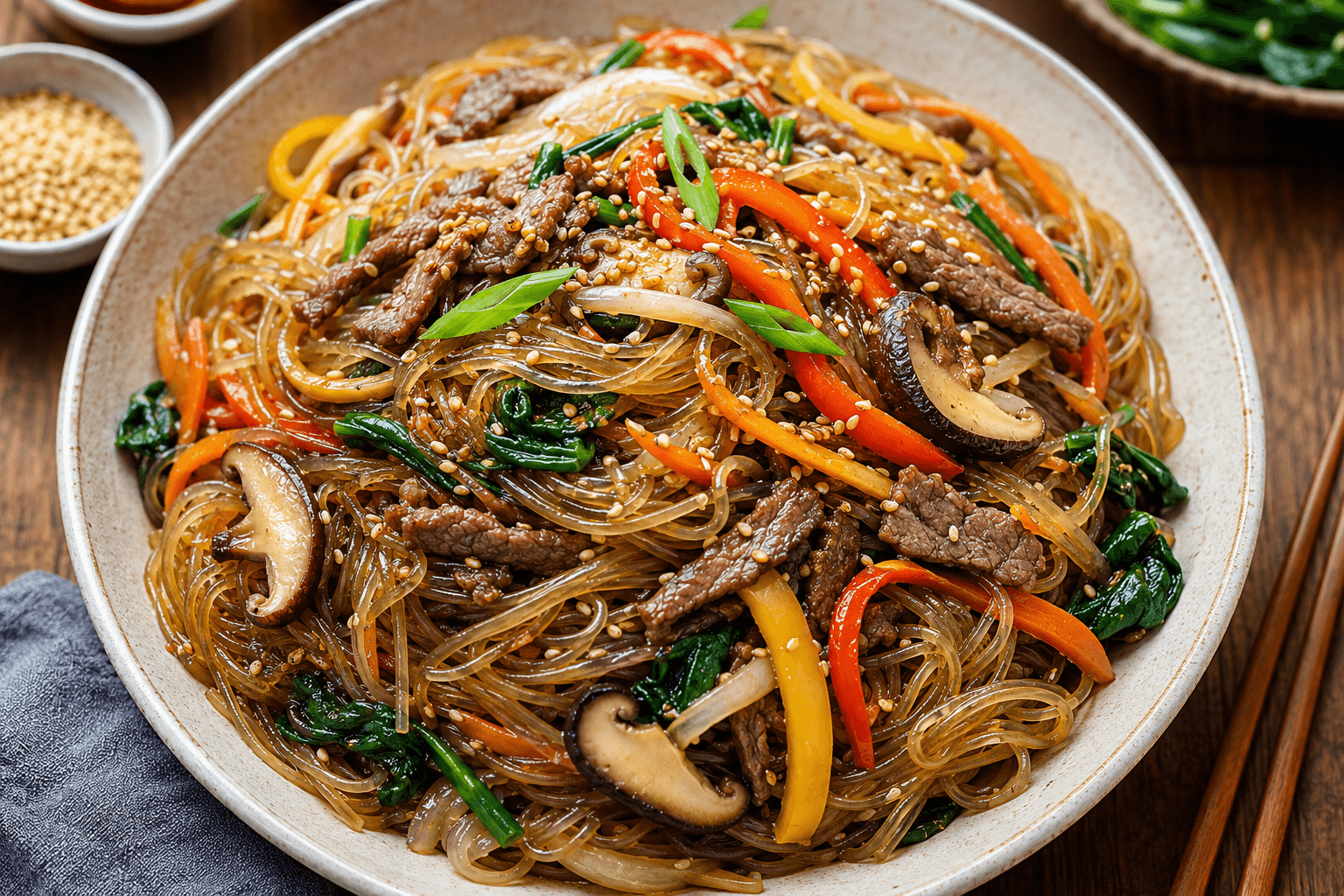
# 7 Irresistible Japchae Noodles Secrets for the Perfect Sweet and Savory Flavor
The Ultimate Homemade Korean Japchae Recipe Everyone Will Love
Japchae noodles are one of Korea’s most beloved dishes, famous for their glossy appearance, chewy texture, colorful vegetables, and perfectly balanced sweet and savory sauce. Whether served at family gatherings, holidays, birthdays, or weeknight dinners, Japchae is a comforting meal that never fails to impress.
Table of Contents
ToggleUnlike wheat noodles, Japchae is made using Korean sweet potato starch noodles, also called glass noodles or dangmyeon. These translucent noodles absorb flavors beautifully while maintaining their signature chewy texture.
This comprehensive guide will teach you everything you need to know—from choosing ingredients and preparing vegetables to creating the perfect sauce and avoiding common mistakes. By the end, you’ll have restaurant-quality Japchae ready to enjoy at home.
What Is Japchae?
Japchae (잡채) literally means “mixed vegetables.” Interestingly, the original version of Japchae contained only vegetables and mushrooms. Glass noodles were added later and eventually became the dish we know today.
Pro Cooking Tips
- Choose quality ingredients because simple recipes depend heavily on flavor.
- Follow the cooking order carefully so textures turn out right.
- Use the correct pan size to avoid overcrowding.
- Serve immediately if the recipe is best enjoyed warm and fresh.
Today, Japchae combines:
- Korean sweet potato glass noodles
- Thinly sliced beef (optional)
- Colorful vegetables
- Mushrooms
- Sesame oil
- Soy sauce
- Garlic
- Sugar
- Sesame seeds
The result is an elegant stir-fry that’s slightly sweet, deeply savory, aromatic, and incredibly satisfying.
Why You’ll Love This Japchae Recipe
This recipe is:
- Easy for beginners
- Ready in under one hour
- Naturally dairy-free
- Full of colorful vegetables
- Perfect for meal prep
- Easily customizable
- Great served hot or cold
- Restaurant-quality at home
Ingredients
For the Noodles
- 8 ounces Korean sweet potato glass noodles
- Water for boiling
For the Beef (Optional)
- 200g sirloin or ribeye
- 1 tablespoon soy sauce
- 1 teaspoon sugar
- 1 teaspoon sesame oil
- 1 garlic clove, minced
- Black pepper
Vegetables
- 1 carrot, julienned
- 1 onion, sliced
- 1 red bell pepper
- 1 yellow bell pepper
- 2 cups spinach
- 5 shiitake mushrooms
- 2 green onions
Sauce
- 5 tablespoons soy sauce
- 2 tablespoons brown sugar
- 2 tablespoons sesame oil
- 2 garlic cloves
- 1 teaspoon black pepper
- 1 tablespoon toasted sesame seeds
Understanding Korean Glass Noodles
What Makes Them Special?
Unlike rice noodles, Korean glass noodles are made entirely from sweet potato starch.
My Experience Making This Recipe
After making this recipe a few times, I found that the overall result improves when you pay attention to small details like ingredient freshness and cooking order.
This is the kind of recipe that becomes easier and more enjoyable each time you make it, especially once you understand how the flavors come together.
They are:
- Naturally chewy
- Slightly translucent
- Gluten-free (check packaging)
- Excellent at soaking up sauces
This texture is what makes authentic Japchae so memorable.
Choosing the Best Vegetables
The beauty of Japchae comes from its vibrant colors.
Orange
Carrots
Reader Tip / Cooking Advice
A helpful approach is to focus on texture as much as flavor. Watching how the ingredients look and feel during cooking can help you get a better final result.
Red
Bell peppers
Green
Spinach
Green onions
Brown
Shiitake mushrooms
White
Onions
Each vegetable contributes unique flavor, texture, and nutrition.
Step-by-Step Instructions
Step 1 – Cook the Noodles
Bring a large pot of water to a boil.
Cook the glass noodles according to package instructions, usually around 6–8 minutes.
Do not overcook them.
Drain immediately.
Rinse briefly in cool water.
Toss with a teaspoon of sesame oil to prevent sticking.
Step 2 – Prepare the Beef
Mix:
- Soy sauce
- Sesame oil
- Garlic
- Sugar
- Pepper
Marinate beef for 20 minutes.
Cook over high heat until just browned.
Set aside.
Step 3 – Cook Each Vegetable Separately
Professional Korean cooks rarely throw everything into one pan.
Instead, each ingredient is cooked individually.
Carrots
Cook for 2 minutes.
Onion
Cook until slightly translucent.
Bell Peppers
Cook quickly so they stay crisp.
Mushrooms
Cook until soft.
Spinach
Blanch for 30 seconds.
Drain.
Squeeze out excess water.
Season lightly with sesame oil.
Why Cook Separately?
Cooking separately allows every ingredient to maintain:
- Bright color
- Proper texture
- Individual flavor
This is one reason restaurant Japchae tastes so good.
Making the Signature Sauce
Mix together:
- Soy sauce
- Brown sugar
- Sesame oil
- Garlic
- Pepper
Whisk until the sugar dissolves completely.
Taste before adding.
Adjust sweetness if needed.
Combining Everything
Place cooked noodles into a large bowl.
Add:
- Beef
- Carrots
- Onion
- Bell peppers
- Mushrooms
- Spinach
Pour over the sauce.
Mix gently with tongs.
Finish with sesame seeds.
Garnish with sliced green onions.
Secret Tips for Perfect Japchae
1. Never Overcook the Noodles
Overcooked noodles become mushy and sticky.
Aim for chewy.
2. Use Toasted Sesame Oil
Fresh toasted sesame oil creates the signature aroma.
3. Slice Everything Evenly
Uniform vegetables cook evenly and look beautiful.
4. Cook Over High Heat
High heat keeps vegetables crisp.
5. Taste Before Serving
Every soy sauce differs in saltiness.
Adjust seasoning if necessary.
6. Let It Rest
Five minutes of resting allows flavors to absorb.
7. Finish with Sesame Seeds
A final sprinkle adds crunch and aroma.
Common Mistakes to Avoid
Adding Too Much Sauce
The noodles should be glossy, not swimming in liquid.
Overcrowding the Pan
Vegetables steam instead of sauté.
Forgetting Sesame Oil
Without it, Japchae loses much of its authentic flavor.
Skipping Garlic
Fresh garlic balances sweetness perfectly.
Overcooking Spinach
It should remain vibrant green.
Delicious Variations
Vegetarian Japchae
Skip the beef.
Add:
- Tofu
- More mushrooms
- Broccoli
Seafood Japchae
Use:
- Shrimp
- Squid
- Scallops
Chicken Japchae
Thin chicken breast works wonderfully.
Spicy Japchae
Add:
- Gochujang
- Chili flakes
- Fresh chilies
Vegan Japchae
Replace beef with mushrooms and use vegan-friendly seasonings.
What to Serve with Japchae
Japchae pairs beautifully with:
Rice
Steamed jasmine or short-grain rice.
Kimchi
Adds acidity and spice.
Korean BBQ
Excellent alongside grilled beef.
Fried Dumplings
A perfect appetizer.
Cucumber Salad
Refreshing and crunchy.
Storage Instructions
Refrigerator
Store in an airtight container for up to four days.
Freezer
Freeze for one month.
Thaw overnight before reheating.
Reheating Tips
Reheat gently in a skillet.
Add:
- One teaspoon sesame oil
- One tablespoon water
Mix until warmed through.
Avoid microwaving too long.
Nutritional Benefits
Japchae offers:
- Fiber from vegetables
- Iron from spinach
- Protein from beef
- Healthy fats from sesame oil
- Vitamins A and C from peppers and carrots
Frequently Asked Questions
Can I Make Japchae Ahead?
Absolutely.
Many people believe Japchae tastes even better the next day because the noodles absorb more flavor.
Is Japchae Gluten-Free?
The noodles usually are.
However, traditional soy sauce contains wheat.
Use gluten-free soy sauce if needed.
Can I Use Rice Noodles?
You can, but the texture won’t be authentic.
Sweet potato starch noodles provide the classic chewy bite.
Why Are My Noodles Sticking Together?
You likely forgot to coat them with sesame oil after draining.
Toss them immediately while still warm.
Can I Eat Japchae Cold?
Yes.
Japchae is delicious warm, at room temperature, or chilled.
Which Mushrooms Are Best?
Shiitake mushrooms are traditional because of their rich umami flavor.
Button mushrooms also work well.
Can I Skip the Sugar?
You can reduce it, but a little sweetness is essential to balance the soy sauce.
Honey or maple syrup can be substituted.
How Can I Add More Protein?
In addition to beef, you can include chicken, shrimp, tofu, or even scrambled egg strips.
Expert Tips for Restaurant-Style Japchae
Use Fresh Ingredients
Fresh vegetables provide the best texture and vibrant color.
Prep Everything Before Cooking
Because stir-frying moves quickly, have all ingredients sliced, measured, and ready to go.
Don’t Rush the Vegetables
Cook each vegetable just until tender-crisp to preserve flavor and nutrients.
Balance the Sauce
The ideal Japchae sauce should taste salty, sweet, nutty, and savory without any one flavor overpowering the others.
Garnish Generously
Finish with toasted sesame seeds, sliced green onions, and optional egg ribbons for a beautiful presentation.
Final Thoughts
Japchae is much more than a simple noodle dish—it’s a celebration of balance, color, texture, and flavor. With its chewy sweet potato noodles, vibrant vegetables, aromatic sesame oil, and perfectly sweet-savory sauce, it’s easy to see why this Korean classic has become popular around the world.
By following the techniques in this guide—cooking each vegetable separately, avoiding overcooked noodles, and balancing the sauce carefully—you can create authentic, restaurant-quality Japchae in your own kitchen. Whether you’re making it for a family dinner, a festive celebration, or weekly meal prep, this versatile recipe is sure to become a favorite.
Once you’ve mastered the classic version, don’t hesitate to experiment with chicken, seafood, tofu, or extra vegetables to make it your own. Serve it warm, at room temperature, or even chilled, and enjoy one of Korea’s most iconic comfort foods any time of year.
The History of Japchae
Japchae has a fascinating history that dates back over 400 years to Korea’s Joseon Dynasty. According to historical records, the dish was first prepared during a royal banquet hosted by King Gwanghaegun in the early 17th century. A court official named Yi Chung created an elegant dish made from finely sliced vegetables and mushrooms, which impressed the king so much that he rewarded the chef with a high-ranking government position.
Interestingly, the earliest version of Japchae did not include noodles at all. Instead, it consisted solely of colorful vegetables seasoned with sesame oil and soy sauce. The sweet potato starch noodles that define modern Japchae today were introduced centuries later, after they became widely available in Korea during the early 1900s.
Over time, the recipe evolved into the version we know today, combining chewy glass noodles with vegetables, mushrooms, beef, and a delicious sweet-savory sauce. Despite these changes, Japchae has retained its status as one of Korea’s most treasured dishes and is now enjoyed around the world.
Why Japchae Is Popular Worldwide
The global popularity of Korean cuisine has brought Japchae into kitchens and restaurants across Europe, North America, Australia, and many parts of Asia. Unlike heavily spicy Korean dishes, Japchae has a mild flavor profile that appeals to a wide audience.
Its growing popularity can be attributed to several factors:
- It is visually stunning, making it ideal for social media.
- It can be served warm or cold.
- It is easy to customize with different proteins and vegetables.
- It is naturally dairy-free.
- It can be made vegetarian or vegan.
- It is suitable for meal prep.
- It pairs well with many other dishes.
Many people preparing Korean food for the first time choose Japchae because it offers authentic Korean flavors without requiring advanced cooking techniques.
Understanding the Role of Each Ingredient
Sweet Potato Glass Noodles
These noodles are the heart of the dish. Unlike wheat noodles, they have a pleasantly chewy texture and absorb sauces exceptionally well without becoming mushy.
Because they are made primarily from sweet potato starch, they remain glossy after cooking and maintain their structure even after refrigeration.
Soy Sauce
Soy sauce provides the savory, umami foundation that defines Japchae.
A high-quality soy sauce creates:
- Rich depth
- Balanced saltiness
- Beautiful caramel color
- Complex flavor
Avoid using overly salty soy sauces, as they can overpower the delicate sweetness.
Sesame Oil
Few ingredients contribute as much aroma as toasted sesame oil.
Just a small amount adds:
- Nutty fragrance
- Rich finish
- Traditional Korean flavor
- Silky texture
Always use toasted sesame oil rather than plain sesame oil for authentic results.
Garlic
Fresh garlic provides warmth and complexity that balances the sweetness of the sauce.
Minced garlic should always be cooked briefly to mellow its sharpness while retaining its aroma.
Sugar
Although many people are surprised by the sweetness of Japchae, sugar is an essential ingredient.
It helps balance:
- Saltiness
- Umami
- Sesame oil richness
Brown sugar, white sugar, honey, or maple syrup all work well.
Vegetables
Vegetables add far more than color.
Each one contributes unique flavors and textures.
Carrots provide sweetness.
Onions add depth.
Bell peppers contribute freshness.
Spinach offers earthiness.
Mushrooms create umami richness.
Together, they produce a perfectly balanced dish.
Choosing the Right Protein
Beef
Traditional Japchae usually contains thin slices of beef.
The best cuts include:
- Ribeye
- Sirloin
- Tenderloin
These cook quickly and remain tender.
Chicken
Chicken breast is a lean alternative.
Slice it very thin so it cooks in under two minutes.
Pork
Thin pork loin or pork shoulder adds slightly richer flavor.
Shrimp
Shrimp creates a lighter seafood version that’s perfect during warmer months.
Tofu
Firm tofu makes an excellent vegetarian option.
Pan-fry it first until golden before adding it to the noodles.
The Importance of Knife Skills
One characteristic of authentic Japchae is the uniform size of every ingredient.
Professional Korean chefs carefully slice vegetables into thin matchsticks.
Benefits include:
- Faster cooking
- Better presentation
- Even texture
- Easier mixing
- More elegant appearance
While it may take a little extra time, consistent slicing makes a noticeable difference.
How Korean Families Serve Japchae
In Korea, Japchae is rarely served as a standalone meal.
Instead, it often appears as part of a larger spread called banchan, where multiple small dishes are shared among everyone at the table.
During celebrations, Japchae is commonly served alongside:
- Steamed rice
- Kimchi
- Korean barbecue
- Pickled vegetables
- Soup
- Pancakes
- Braised dishes
Because it tastes delicious both warm and cold, it can remain on the table throughout the meal without losing its appeal.
Seasonal Variations of Japchae
Spring
Spring versions often include:
- Asparagus
- Fresh spinach
- Snap peas
- Young onions
These vegetables add brightness and freshness after the winter months.
Summer
Summer Japchae may feature:
- Zucchini
- Yellow squash
- Fresh herbs
- Bell peppers
Some families even serve it chilled for a refreshing meal.
Autumn
Autumn versions are richer and often include:
- Shiitake mushrooms
- Chestnuts
- Sweet pumpkin
- Extra sesame seeds
These ingredients complement the cooler weather.
Winter
Winter Japchae frequently includes:
- Beef
- More mushrooms
- Extra garlic
- Warm sesame oil
It becomes a comforting centerpiece during holiday celebrations.
Meal Prep Guide
Japchae is one of the best Korean dishes for meal preparation.
Day One
Prepare:
- Vegetables
- Sauce
- Protein
Store separately.
Day Two
Cook noodles.
Quickly stir-fry everything together.
Dinner is ready in less than fifteen minutes.
Storage Tips
Keep sauce separate whenever possible.
This prevents noodles from absorbing too much liquid.
Serving Ideas
Japchae is incredibly versatile.
Serve it:
- As a main course
- As a side dish
- Inside lettuce wraps
- Alongside grilled meat
- In lunch boxes
- At potluck dinners
- During holiday celebrations
- At family gatherings
It also works beautifully for picnics because it tastes great even at room temperature.
Pairing Drinks with Japchae
To complement the sweet and savory flavors of Japchae, consider these beverages:
Green Tea
Its mild bitterness balances the richness of sesame oil.
Sparkling Water
Cleanses the palate between bites.
Citrus Lemonade
Adds refreshing acidity.
Iced Barley Tea
A traditional Korean choice that pairs wonderfully with noodle dishes.
Frequently Asked Questions About Japchae
Why does restaurant Japchae taste different?
Restaurants often cook each ingredient separately before combining everything at the end. This technique preserves texture and creates more balanced flavors.
Can I reduce the sugar?
Yes. You can reduce the amount slightly, but completely removing it will change the signature sweet and savory balance.
Can children enjoy Japchae?
Absolutely. Since traditional Japchae is not spicy, it is a family-friendly dish that children often enjoy.
Is Japchae healthy?
Japchae can be part of a balanced diet. It includes a variety of vegetables, lean protein, and moderate amounts of healthy fats from sesame oil. To make it even healthier, increase the vegetables and use less sugar.
Why are my noodles hard after cooling?
If the noodles cool without being coated in sesame oil or sauce, they can become firm. Tossing them with a little sesame oil immediately after draining helps maintain their chewy texture.
Can I make Japchae without mushrooms?
Yes. While mushrooms add umami flavor, you can omit them or replace them with zucchini, broccoli, or additional bell peppers.
Expert Chef Secrets for Perfect Japchae
Marinate the Protein
Even a short 15–20 minute marinade helps the meat absorb flavor and stay tender.
Cook in Small Batches
Overcrowding the pan causes ingredients to steam instead of sauté, which can make vegetables soggy.
Toss Gently
Use tongs or chopsticks to mix the noodles with the vegetables. This prevents the noodles from breaking and distributes the sauce evenly.
Taste Before Serving
Every brand of soy sauce has a different salt level. Always taste the finished dish and adjust with a splash of soy sauce or a pinch of sugar if needed.
Garnish Last
Add toasted sesame seeds and sliced green onions just before serving for maximum freshness and aroma.
Conclusion
Japchae is a timeless Korean classic that brings together chewy sweet potato glass noodles, vibrant vegetables, tender protein, and a beautifully balanced sweet and savory sauce. Its colorful presentation, versatile ingredients, and satisfying texture make it a favorite for everyday dinners as well as festive celebrations.
Whether you stick to the traditional recipe or create your own variation with chicken, shrimp, tofu, or seasonal vegetables, Japchae is a dish that rewards careful preparation and quality ingredients. By mastering the techniques shared in this guide—cooking vegetables separately, balancing the sauce, and preserving the noodles’ signature chewiness—you’ll be able to create restaurant-quality Japchae at home every time.
Once you’ve tasted homemade Japchae, you’ll understand why this iconic Korean noodle dish has been loved for centuries and continues to win hearts around the world. Enjoy it fresh, share it with family and friends, and don’t be surprised if it becomes one of your most requested recipes.
The Art of Balancing Flavors in Japchae
One of the defining characteristics of Japchae is its perfect harmony of flavors. Unlike many noodle dishes that emphasize either sweetness or saltiness, Japchae achieves a delicate balance between sweet, savory, nutty, and umami notes. Every ingredient plays an important role in creating this balance.
Soy sauce forms the savory backbone of the dish, while sugar or honey introduces a gentle sweetness that softens the saltiness. Toasted sesame oil contributes a rich, nutty aroma that ties everything together, and garlic adds depth and warmth. Fresh vegetables provide natural sweetness and texture, while mushrooms enhance the umami flavor. The result is a dish that is flavorful without being overwhelming.
Professional chefs often recommend tasting the sauce before adding it to the noodles. Small adjustments, such as an extra teaspoon of soy sauce for more depth or a touch of honey for additional sweetness, can make a noticeable difference. Since different brands of soy sauce vary in saltiness, tasting as you cook ensures your Japchae is perfectly seasoned every time.
Why Cooking Ingredients Separately Matters
Many home cooks wonder why traditional Japchae recipes require each vegetable to be cooked individually instead of tossing everything into one pan. Although this method takes a little more time, it dramatically improves the final dish.
Each vegetable has a different moisture content and cooking time. For example, onions become tender quickly, carrots require slightly longer cooking, while spinach only needs a brief blanching. Cooking everything together often leads to uneven textures, with some vegetables becoming overcooked while others remain underdone.
Cooking ingredients separately also helps preserve their vibrant colors. Bright orange carrots, deep green spinach, and vivid red bell peppers create the beautiful rainbow appearance that makes Japchae so visually appealing.
Another benefit is flavor control. Each ingredient retains its own distinct taste rather than becoming lost in the mixture. Once everything is combined, the noodles absorb the individual flavors, creating a more complex and satisfying dish.
The Science Behind Glass Noodles
Glass noodles are unique because they are made primarily from sweet potato starch rather than wheat flour. When cooked, the starch absorbs water and becomes translucent, giving the noodles their signature glossy appearance.
Unlike wheat noodles, sweet potato noodles have a pleasantly elastic texture. This chewiness allows them to stand up well during stir-frying without breaking apart. They also absorb sauces exceptionally well while maintaining their structure.
Another advantage is that glass noodles continue to taste delicious after refrigeration. Many noodle dishes become dry or sticky when chilled, but properly prepared Japchae remains soft and flavorful, making it an excellent make-ahead meal.
Essential Kitchen Equipment
Although Japchae doesn’t require specialized tools, having the right equipment makes preparation much easier.
Large Pot
A large pot allows the noodles to cook evenly without sticking together.
Sharp Chef’s Knife
A sharp knife is essential for creating thin, uniform vegetable slices. Consistent cuts not only improve presentation but also ensure even cooking.
Cutting Board
Use a spacious cutting board to organize vegetables before cooking.
Large Skillet or Wok
A wide skillet or wok provides enough room to stir-fry ingredients quickly over high heat. This helps vegetables retain their crisp texture.
Mixing Bowl
A large bowl is useful for combining noodles, vegetables, protein, and sauce without spilling ingredients.
Tongs or Chopsticks
These make it easier to gently toss the noodles without breaking them.
Best Vegetables to Experiment With
Although traditional Japchae typically includes carrots, onions, spinach, mushrooms, and bell peppers, many other vegetables work beautifully in this dish.
Broccoli
Adds crunch and a mild earthy flavor.
Snow Peas
Provide sweetness and crisp texture.
Baby Corn
Creates a pleasant crunch while adding visual interest.
Zucchini
Adds moisture and a subtle sweetness.
Bok Choy
A wonderful leafy green alternative to spinach.
Bean Sprouts
Contribute freshness and additional crunch.
Purple Cabbage
Adds striking color and a slightly sweet flavor.
Using seasonal vegetables allows you to enjoy Japchae throughout the year while keeping the recipe fresh and exciting.
How to Prepare Japchae for Special Occasions
Japchae is one of Korea’s most popular celebration dishes because it looks elegant and feeds a crowd. Whether you’re hosting a birthday party, holiday gathering, or family dinner, Japchae can easily be prepared in large batches.
When serving guests, consider garnishing the dish with:
- Toasted sesame seeds
- Thin egg ribbons
- Extra sliced green onions
- Julienned red chili peppers for color
- Fresh parsley or microgreens for a modern presentation
Serving Japchae on a large white platter helps showcase its colorful ingredients and glossy noodles, creating an eye-catching centerpiece for your table.
Pairing Japchae with Other Korean Dishes
A complete Korean meal often includes several dishes served together. Japchae pairs beautifully with a variety of traditional Korean foods.
Steamed Rice
Simple white rice balances the rich flavors of the noodles.
Kimchi
Its spicy and tangy taste contrasts wonderfully with Japchae’s sweetness.
Korean Fried Chicken
Crispy fried chicken adds satisfying crunch alongside the chewy noodles.
Bulgogi
Sweet soy-marinated grilled beef complements Japchae perfectly.
Korean Pancakes
Vegetable or seafood pancakes provide another delicious texture.
Dumplings
Steamed or pan-fried dumplings make an excellent appetizer.
Miso or Seaweed Soup
A light soup rounds out the meal without overpowering the noodles.
Making Japchae Healthier
Japchae is already packed with vegetables, but there are several ways to make it even more nutritious.
Increase the Vegetables
Double the amount of carrots, spinach, mushrooms, and peppers to boost vitamins and fiber.
Reduce the Sugar
Use less sugar or replace part of it with natural sweeteners like honey.
Choose Lean Protein
Chicken breast, shrimp, or tofu are excellent lower-fat alternatives to beef.
Use Low-Sodium Soy Sauce
This helps reduce the sodium content without sacrificing flavor.
Add More Greens
Leafy vegetables such as kale or bok choy increase the nutritional value.
Watch Portion Sizes
Since the noodles are carbohydrate-rich, balancing them with extra vegetables and protein creates a more satisfying meal.
Entertaining Tips
If you’re serving Japchae at a party, prepare most of the ingredients in advance.
The day before:
- Slice vegetables.
- Prepare the sauce.
- Marinate the meat.
A few hours before serving:
- Cook the vegetables.
- Refrigerate separately.
Just before dinner:
- Boil the noodles.
- Combine everything in a large skillet.
- Toss with sauce.
- Garnish and serve.
This approach minimizes last-minute cooking and ensures every ingredient tastes fresh.
Creative Leftover Ideas
Leftover Japchae rarely goes to waste because it can be transformed into several delicious meals.
Japchae Fried Rice
Chop the noodles into smaller pieces and stir-fry them with rice, eggs, and vegetables.
Lettuce Wraps
Wrap chilled Japchae inside crisp lettuce leaves for a refreshing lunch.
Stuffed Omelet
Fill a fluffy omelet with warmed Japchae for a Korean-inspired breakfast.
Spring Rolls
Roll Japchae into rice paper wrappers with fresh herbs for a light appetizer.
Noodle Salad
Serve cold with cucumber, sesame seeds, and a splash of rice vinegar.
These ideas help reduce food waste while giving leftovers a completely new flavor and texture.
Reader Success Tips
If this is your first time making Japchae, don’t worry if it doesn’t look exactly like restaurant versions. The key is practice. Focus on learning the cooking times for each ingredient, preparing everything before turning on the stove, and tasting as you go. Each time you make Japchae, you’ll become more confident in balancing the sauce and achieving the perfect noodle texture.
Remember that authentic Korean cooking values balance, freshness, and attention to detail. Taking a few extra minutes to prepare your ingredients carefully will reward you with a dish that’s not only delicious but also visually stunning.
Final Thoughts
Japchae is far more than a simple noodle stir-fry—it’s a dish that showcases the beauty of Korean cuisine through its vibrant colors, varied textures, and perfectly balanced flavors. From the chewy sweet potato glass noodles to the crisp vegetables and aromatic sesame oil, every bite offers a delightful combination of sweet, savory, and nutty notes.
Whether you’re preparing Japchae for a quick weeknight dinner, meal prepping for the week, or serving it at a festive celebration, this versatile dish is sure to impress. By following the traditional techniques outlined in this guide, choosing fresh ingredients, and taking the time to cook each component with care, you’ll be able to create a restaurant-quality Japchae that your family and friends will request again and again.
With its rich history, nutritional benefits, and endless customization options, Japchae deserves a permanent place in every home cook’s recipe collection. Once you’ve mastered this Korean classic, you’ll discover why it has remained one of Korea’s most beloved dishes for centuries and continues to delight food lovers around the globe.
Final Thoughts
This dish works well because it is practical, easy to repeat, and full of flavor. Once you try it, it can easily become part of your regular cooking routine.
Feel free to make it your own by adjusting the details that matter most to you.