
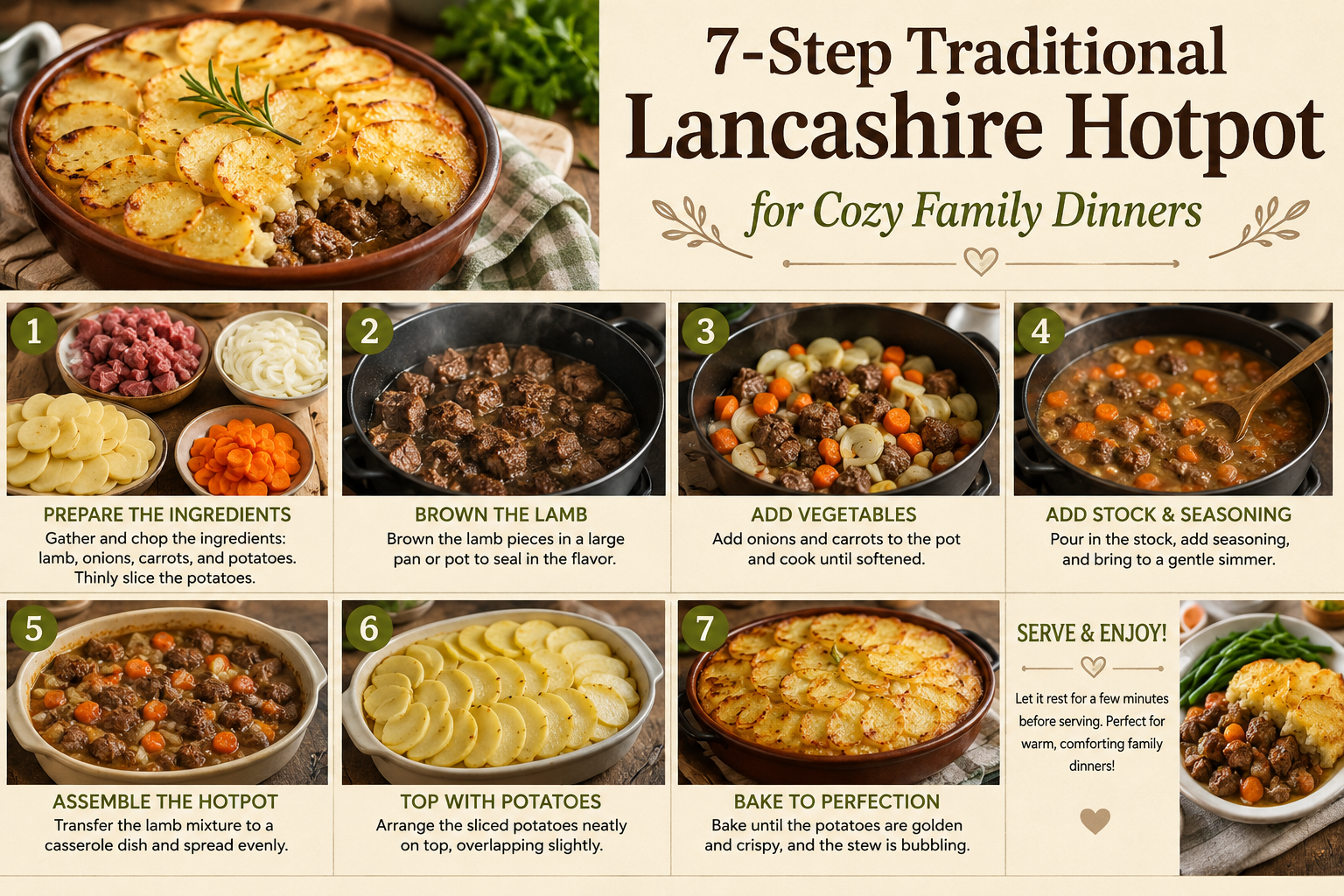
7-Step Traditional Lancashire Hotpot for Cozy Family Dinners
A Hearty British Classic Packed With Comfort and Rich Flavor
There is something truly comforting about a bubbling dish of Traditional Lancashire Hotpot fresh from the oven. This iconic British recipe combines tender lamb, rich onion gravy, and beautifully crisp golden potatoes into one deeply satisfying meal. Perfect for chilly evenings, Sunday suppers, or cozy family gatherings, Lancashire Hotpot has stood the test of time as one of the UK’s most beloved comfort foods.
Table of Contents
ToggleOriginally created in Northwest England, this dish became popular because it used simple, affordable ingredients that could slowly cook while families worked throughout the day. The result was a warming and filling dinner that brought everyone together around the table.
Today, Lancashire Hotpot remains a treasured recipe in British homes. Its rustic charm, incredible flavor, and easy preparation make it ideal for both beginner cooks and experienced home chefs.
In this complete guide, you will learn everything you need to know about making the perfect Lancashire Hotpot, including ingredients, cooking tips, variations, serving suggestions, storage advice, and expert techniques for achieving those signature crispy potatoes.
Pro Cooking Tips
- Read the full recipe once before starting to avoid mistakes.
- Cook patiently and do not rush the important steps.
- Watch for texture and aroma, not just the clock.
- Adjust the final flavor based on your own taste preferences.
What Is Lancashire Hotpot?
Lancashire Hotpot is a traditional slow-cooked casserole made primarily with lamb or mutton, onions, rich stock or gravy, and sliced potatoes layered on top.
Unlike stews where potatoes are mixed throughout the dish, the potatoes in Lancashire Hotpot create a beautiful golden topping that becomes crisp during baking while soaking up the delicious flavors underneath.
The dish originated in Lancashire, England, during the Industrial Revolution. Working families loved it because it was inexpensive, nourishing, and easy to prepare in one pot.
Traditional recipes typically include:
My Experience Making This Recipe
My own experience with this recipe showed me that simple meals can still feel special when they are prepared with care. The flavor was much better when I gave each step enough time.
I also noticed that serving the dish at the right moment made a difference, especially for texture and freshness.
- Lamb or mutton
- Onions
- Potatoes
- Stock or broth
- Worcestershire sauce
- Herbs like thyme or bay leaves
Modern versions sometimes add carrots or pearl onions, but the classic simplicity remains the secret to its timeless appeal.
Why Families Love This Traditional Lancashire Hotpot
Comfort Food at Its Best
Few dishes feel as cozy and satisfying as a rich hotpot on a cold evening. The tender meat and creamy potatoes create the perfect comfort meal.
Easy One-Pot Dinner
Everything cooks in a single dish, meaning less cleanup and easy preparation.
Budget-Friendly Meal
Lancashire Hotpot uses affordable ingredients while still delivering incredible flavor.
Reader Tip / Cooking Advice
Always taste when possible before serving. A small final adjustment in seasoning or cooking time can improve the dish more than expected.
Perfect for Meal Prep
The flavors actually improve the next day, making it excellent for leftovers.
Ideal for Family Gatherings
This hearty dish feeds multiple people easily and pairs wonderfully with vegetables and bread.
Ingredients for Traditional Lancashire Hotpot
For the Meat Filling
Lamb or Mutton
Traditionally, mutton was used because it was affordable and flavorful. Today, lamb shoulder or lamb neck works beautifully.
You will need:
- 800g lamb shoulder, cut into chunks
Onions
Onions add sweetness and depth to the gravy.
You will need:
- 2 large onions, sliced
Flour
Flour lightly coats the lamb and helps thicken the gravy.
You will need:
- 2 tablespoons plain flour
Beef or Lamb Stock
Rich stock creates the flavorful base of the dish.
You will need:
- 500ml stock
Worcestershire Sauce
Adds savory richness and depth.
You will need:
- 1 tablespoon Worcestershire sauce
Herbs
Classic herbs include:
- Thyme
- Bay leaves
- Black pepper
For the Potato Topping
Potatoes
Use floury potatoes like Maris Piper or King Edward for the best texture.
You will need:
- 1kg potatoes, thinly sliced
Butter
Butter helps create the iconic golden crispy topping.
You will need:
- 40g butter, melted
Kitchen Equipment You Need
Essential Equipment
- Large ovenproof casserole dish
- Sharp knife
- Frying pan
- Wooden spoon
- Mandoline slicer (optional)
Step-by-Step Traditional Lancashire Hotpot Recipe
Step 1: Prepare the Lamb
Pat the lamb pieces dry using paper towels.
Dry meat browns better and creates richer flavor.
Season with:
- Salt
- Black pepper
Lightly coat the meat in flour.
Step 2: Brown the Meat
Why Browning Matters
Browning creates deep caramelized flavor that gives the hotpot its signature richness.
Heat oil in a frying pan over medium-high heat.
Brown the lamb in batches for about:
- 4–5 minutes per batch
Avoid overcrowding the pan.
Once browned, transfer the meat to the casserole dish.
Step 3: Cook the Onions
In the same pan, cook sliced onions until soft and golden.
This usually takes:
- 8–10 minutes
The onions absorb the flavorful meat juices and create a delicious base.
Add:
- Worcestershire sauce
- Thyme
- Bay leaves
Stir well.
Step 4: Build the Gravy
Pour the stock into the onion mixture.
Bring to a gentle simmer.
The flour from the lamb helps thicken the gravy naturally.
Pour everything over the lamb in the casserole dish.
Step 5: Layer the Potatoes
The Secret to Beautiful Layers
Arrange the potato slices neatly across the top.
Slightly overlap them for the classic appearance.
Brush generously with melted butter.
Season lightly with salt and pepper.
Step 6: Slow Bake the Hotpot
Cover the dish with a lid or foil.
Bake at:
- 160°C (320°F)
Cook for:
- 1 hour 30 minutes
Then remove the lid and cook for another:
- 30–40 minutes
This creates the signature crispy golden topping.
Step 7: Rest Before Serving
Allow the hotpot to rest for:
- 10 minutes
This helps the gravy thicken and improves the flavor.
Serve hot with vegetables or crusty bread.
Best Potatoes for Lancashire Hotpot
Maris Piper
Excellent crispness and fluffy texture.
King Edward
Traditional British favorite for baking.
Yukon Gold
Creamier texture with rich flavor.
Avoid waxy potatoes because they do not crisp properly.
Tips for the Best Lancashire Hotpot
Slice Potatoes Evenly
Uniform slices cook more evenly.
A mandoline slicer works wonderfully.
Use Good Quality Stock
Rich homemade stock creates deeper flavor.
Slow Cooking Is Essential
Low and slow cooking keeps the lamb tender.
Don’t Skip Browning
This step adds major flavor to the dish.
Butter the Potatoes Well
Butter helps create the iconic crispy top.
Traditional Lancashire Hotpot Variations
Beef Hotpot
Replace lamb with slow-cooking beef chunks.
Lamb and Kidney Hotpot
A classic old-fashioned variation.
Vegetarian Hotpot
Use:
- Mushrooms
- Lentils
- Vegetable stock
Cheesy Hotpot
Add grated cheddar to the potato topping.
What to Serve With Lancashire Hotpot
Buttered Peas
Sweet peas pair beautifully with rich gravy.
Steamed Cabbage
Traditional and simple.
Roasted Carrots
Adds sweetness and color.
Crusty Bread
Perfect for soaking up gravy.
Pickled Red Cabbage
Cuts through the richness nicely.
The History of Lancashire Hotpot
Lancashire Hotpot dates back to the 18th and 19th centuries in Northern England.
Factory workers and laborers needed inexpensive meals that could cook slowly while they worked long hours. Families would prepare the hotpot in the morning and leave it cooking gently throughout the day.
Mutton was commonly used because it was cheaper than prime cuts of meat. Potatoes became the ideal topping because they were affordable, filling, and easy to grow locally.
Today, Lancashire Hotpot is considered one of Britain’s greatest traditional comfort foods.
Common Mistakes to Avoid
Using Lean Meat
Lean cuts can become dry.
Choose lamb shoulder or neck for best results.
Rushing the Cooking Time
Slow cooking is essential for tender meat.
Adding Too Much Liquid
The gravy should be rich, not watery.
Thick Potato Slices
Thin slices cook more evenly and crisp better.
How to Store Lancashire Hotpot
Refrigerating
Store leftovers in an airtight container for:
- Up to 3 days
Freezing
Freeze portions for:
- Up to 3 months
Allow to cool fully before freezing.
How to Reheat Lancashire Hotpot
Oven Method
Best for maintaining crispy potatoes.
Reheat at:
- 180°C (350°F)
For:
- 20–25 minutes
Microwave Method
Faster but potatoes may soften slightly.
Can You Make Lancashire Hotpot Ahead of Time?
Absolutely.
In fact, many people believe the flavors improve overnight.
Prepare the hotpot fully, refrigerate overnight, then bake before serving.
This makes it perfect for:
- Dinner parties
- Family gatherings
- Sunday meals
Why This Dish Is Perfect for Winter
Lancashire Hotpot is the definition of cold-weather comfort food.
The slow-cooked lamb, rich gravy, and buttery potatoes create warmth and satisfaction during colder months.
It is especially popular in:
- Autumn
- Winter
- Rainy evenings
The hearty ingredients make it ideal for cozy indoor dining.
Nutritional Benefits of Lancashire Hotpot
Protein-Rich
Lamb provides excellent protein for muscle support and energy.
Filling and Satisfying
Potatoes provide long-lasting carbohydrates.
Rich in Iron
Lamb is naturally high in iron and vitamin B12.
Homemade Comfort Food
Unlike processed meals, homemade hotpot contains wholesome ingredients.
Lancashire Hotpot for Special Occasions
While traditionally a simple family meal, Lancashire Hotpot is now commonly served at:
- Holiday dinners
- Family reunions
- Sunday lunches
- Winter celebrations
Its rustic presentation and incredible aroma make it a crowd-pleasing centerpiece.
Expert Tips From British Home Cooks
Add a Splash of Ale
British ale adds wonderful depth to the gravy.
Use Lamb Neck Fillet
It becomes beautifully tender after slow cooking.
Crisp Potatoes Under the Grill
For extra crispiness, grill for:
- 3–5 minutes before serving
Season Every Layer
Light seasoning throughout improves overall flavor.
Frequently Asked Questions
Can I Use Beef Instead of Lamb?
Yes. Beef chuck or stewing beef works very well.
What Potatoes Work Best?
Floury potatoes like Maris Piper or King Edward.
Is Lancashire Hotpot the Same as Shepherd’s Pie?
No.
Shepherd’s Pie uses mashed potatoes, while Lancashire Hotpot uses sliced potatoes.
Can I Cook It in a Slow Cooker?
Yes, but finish in the oven to crisp the potatoes.
Final Thoughts
Traditional Lancashire Hotpot is more than just a meal — it is a comforting piece of British culinary history. From its rich gravy and tender lamb to its beautifully crisp golden potatoes, every bite delivers warmth and satisfaction.
Whether you are cooking for your family on a cold evening or preparing a classic British feast for guests, this hotpot is guaranteed to impress.
Its simplicity, affordability, and incredible flavor explain why generations of British families continue to treasure this timeless recipe.
Once you try this cozy homemade Lancashire Hotpot, it may quickly become one of your favorite comfort dinners too.
Best Vegetables to Add to Lancashire Hotpot
While traditional Lancashire Hotpot is beautifully simple, many modern home cooks enjoy adding extra vegetables for more flavor, texture, and nutrition.
Carrots
Carrots bring natural sweetness to the gravy and pair wonderfully with lamb.
Best Way to Use Carrots
- Slice thinly or cut into chunks
- Add beneath the potato layer
- Cook slowly with the meat
Pearl Onions
Pearl onions add a rich, slightly sweet flavor and look beautiful in the dish.
Celery
Celery gives the gravy more depth and aromatic flavor.
Turnips or Swede
Very traditional in Northern England, these root vegetables add earthy richness and extra heartiness.
How British Pubs Serve Lancashire Hotpot
Many traditional British pubs proudly feature Lancashire Hotpot on their winter menus. Pub-style hotpot usually includes:
- Extra thick gravy
- Very crispy potato topping
- Rich lamb shoulder
- Buttered seasonal vegetables
- Crusty bread on the side
Some gastropubs even serve individual hotpots baked in small ceramic dishes for a rustic presentation.
How to Make Lancashire Hotpot Extra Flavorful
Use Homemade Stock
Homemade lamb or beef stock creates much deeper flavor than store-bought cubes.
Add Fresh Thyme
Fresh herbs provide a brighter and more authentic taste.
Slow Cook Longer
The longer the lamb cooks gently, the more tender and flavorful it becomes.
Deglaze the Pan
After browning the lamb, use stock to scrape up the browned bits from the pan.
These caramelized pieces contain huge amounts of flavor.
The Secret to Crispy Potato Topping
The potato topping is one of the most important parts of Lancashire Hotpot.
Choose the Right Potatoes
Floury potatoes crisp much better than waxy ones.
Slice Thinly
Thin slices cook evenly and become beautifully golden.
Brush Generously With Butter
Butter helps create crispy edges and rich flavor.
Finish Uncovered
Always remove the lid during the final stage of cooking.
This allows moisture to escape and helps the potatoes crisp perfectly.
Budget-Friendly Lancashire Hotpot Tips
Lancashire Hotpot became famous because it was economical and filling.
Here are some ways to keep it affordable today.
Use Cheaper Cuts of Lamb
Lamb neck and shoulder become incredibly tender when slow cooked.
Bulk It Out With Vegetables
Adding carrots, onions, and swede makes the meal stretch further.
Make a Larger Batch
Leftovers taste amazing the next day.
Serve With Bread
Crusty bread makes the meal even more filling for large families.
Traditional Lancashire Hotpot vs Modern Versions
Traditional Recipe
Classic versions focus on:
- Lamb or mutton
- Onions
- Potatoes
- Simple gravy
The emphasis is on simplicity and slow cooking.
Modern Recipes
Today’s variations may include:
- Red wine
- Garlic
- Rosemary
- Cheese topping
- Extra vegetables
Both styles are delicious, but traditional recipes remain the heart of British comfort cooking.
Best Drinks to Serve With Lancashire Hotpot
British Ale
A rich dark ale pairs beautifully with lamb.
Red Wine
Try:
- Merlot
- Shiraz
- Cabernet Sauvignon
English Cider
Dry cider balances the richness of the dish.
Tea
Many British families simply enjoy hot tea with comforting dinners.
How to Make Lancashire Hotpot for a Crowd
This recipe is perfect for feeding larger groups.
Double the Ingredients
Use a larger casserole dish and increase cooking time slightly.
Prepare Ahead
Assemble everything earlier in the day and refrigerate until ready to bake.
Keep Warm Easily
Lancashire Hotpot stays warm for a long time, making it excellent for gatherings.
Lancashire Hotpot Around the UK
Although it originated in Lancashire, the dish is now enjoyed across the entire United Kingdom.
Northern England
The most traditional versions are still found here.
Scotland
Scottish versions sometimes include root vegetables and stronger gravies.
Wales
Welsh cooks may add lamb stock and local herbs.
London Gastropubs
Modern restaurants often create gourmet versions using premium lamb and fancy presentation.
The Role of Potatoes in British Comfort Food
Potatoes are essential in many classic UK dishes, including:
- Shepherd’s Pie
- Cottage Pie
- Bubble and Squeak
- Lancashire Hotpot
Their affordability and versatility made them a staple ingredient in working-class British cooking for generations.
In Lancashire Hotpot, potatoes serve two important roles:
- Absorbing rich gravy flavors
- Creating a crispy golden topping
This combination makes the dish uniquely satisfying.
Why Slow Cooking Improves Flavor
Slow cooking transforms simple ingredients into something deeply rich and comforting.
Tenderizes Tough Cuts
Lamb shoulder becomes melt-in-your-mouth soft after long cooking.
Builds Rich Gravy
The juices slowly combine with stock and onions.
Intensifies Flavor
Long cooking allows every ingredient to fully develop.
Creates Better Texture
The potato topping becomes perfectly crisp while the filling stays moist underneath.
How to Present Lancashire Hotpot Beautifully
Even rustic comfort food can look impressive.
Use Rustic Serving Dishes
Stoneware or ceramic dishes create authentic British presentation.
Garnish With Fresh Herbs
Fresh thyme or parsley brightens the appearance.
Serve Family Style
Place the casserole dish directly on the table for cozy dining.
Pair With Colorful Vegetables
Green peas or carrots create a more vibrant plate.
Lancashire Hotpot for Meal Prep
This dish works brilliantly for weekly meal preparation.
Portion Into Containers
Divide leftovers into individual servings.
Freeze for Easy Dinners
Perfect for busy weekdays.
Reheats Well
The flavors become even richer after resting overnight.
Traditional British Comfort Foods Similar to Lancashire Hotpot
If you enjoy Lancashire Hotpot, you may also love these classic British dishes.
Shepherd’s Pie
Made with minced lamb and mashed potato topping.
Cottage Pie
Similar to Shepherd’s Pie but uses beef.
Steak and Ale Pie
Rich beef filling baked inside pastry.
Toad in the Hole
Sausages baked in Yorkshire pudding batter.
Beef Stew and Dumplings
Another comforting slow-cooked British classic.
How Lancashire Hotpot Became Famous
Lancashire Hotpot gained popularity because it perfectly suited working families during the Industrial Revolution.
Busy workers needed meals that:
- Used cheap ingredients
- Cooked slowly unattended
- Fed large families
- Stayed warm for hours
The recipe became deeply connected to Northern English culture and remains one of Britain’s most iconic comfort foods today.
Perfect Occasions for Lancashire Hotpot
Rainy Evenings
Nothing feels more comforting during wet weather.
Sunday Family Dinners
A classic choice for gathering everyone around the table.
Winter Holidays
Warm and filling for festive periods.
Casual Dinner Parties
Easy to prepare in advance while still feeling impressive.
Final Serving Suggestions
For the ultimate cozy British dinner experience, serve Lancashire Hotpot with:
- Buttered peas
- Roasted carrots
- Thick gravy
- Crusty bread
- Pickled red cabbage
- Warm tea or ale
The combination of rich lamb, silky onions, flavorful gravy, and crispy potatoes creates a meal that feels deeply comforting and timeless.
Traditional Lancashire Hotpot proves that simple ingredients, cooked slowly with care, can become something truly unforgettable.
Why Lancashire Hotpot Remains Popular Today
Even after hundreds of years, Lancashire Hotpot continues to be one of the UK’s favorite comfort meals. While food trends constantly change, this traditional dish has remained loved because it delivers everything people want from home cooking — warmth, flavor, simplicity, and nostalgia.
Many families pass their hotpot recipes down through generations, with each household adding its own small twist. Some add extra herbs, while others prefer thicker gravy or crispier potatoes. No matter the variation, the heart of the recipe always stays the same.
Modern busy lifestyles have also helped keep Lancashire Hotpot relevant. Since it can slowly cook in the oven with minimal attention, it fits perfectly into family routines. It is easy to prepare ahead, affordable for larger households, and satisfying enough to feed everyone comfortably.
Restaurants and pubs across Britain still proudly serve Lancashire Hotpot during colder months because customers continue to crave traditional comfort food.
The Importance of Slow Cooking in British Cuisine
Slow cooking has always been a huge part of traditional British cooking.
Historically, families relied on slow-cooked meals because:
- Tough cuts of meat were cheaper
- Large families needed filling meals
- Food had to cook while people worked long hours
Recipes like Lancashire Hotpot became popular because they transformed simple ingredients into rich and hearty dishes through patience and gentle heat.
Slow cooking allows:
- Meat fibers to soften
- Flavors to deepen
- Gravy to thicken naturally
- Potatoes to absorb delicious juices
This method creates layers of flavor that quick cooking simply cannot match.
Traditional Lancashire Hotpot Cooking Techniques
Layering Ingredients Properly
The order of ingredients matters greatly.
The meat sits at the bottom so it can slowly braise in the gravy while the potatoes steam and crisp on top.
Using Heavy Cookware
Traditional cooks often used:
- Cast iron pots
- Ceramic baking dishes
- Heavy casserole pans
These materials distribute heat evenly and retain warmth beautifully.
Cooking With the Lid On First
Covering the dish initially traps moisture and tenderizes the lamb.
Removing the lid later allows the potatoes to crisp and brown perfectly.
How to Achieve Restaurant-Style Results at Home
Many people believe pub-style Lancashire Hotpot tastes better because of its deep flavor and crispy texture. Fortunately, you can recreate that experience at home.
Brown the Meat Thoroughly
Dark golden browning creates richer flavor.
Use Real Butter
Butter gives the potato topping better color and taste.
Add Fresh Herbs
Fresh thyme makes a major difference compared to dried herbs.
Let the Dish Rest
Resting helps the gravy settle and improves overall texture.
Finish Under the Grill
A few minutes under the grill creates extra crispiness on the potatoes.
The Best Lamb Cuts for Hotpot
Not all cuts of lamb are ideal for slow cooking.
Lamb Shoulder
The most popular choice because it becomes tender and flavorful.
Lamb Neck
Rich, affordable, and excellent for slow cooking.
Lamb Shank
Creates incredibly rich gravy but requires longer cooking.
Avoid Lean Cuts
Lean lamb can dry out during slow cooking.
Traditional British Food Culture
Lancashire Hotpot reflects the heart of British home cooking culture.
British comfort food is often:
- Hearty
- Filling
- Affordable
- Family-focused
- Slow-cooked
Meals were traditionally designed to:
- Feed hardworking families
- Stretch ingredients further
- Provide warmth during cold weather
That practical approach helped create many iconic British dishes still enjoyed today.
Why Potatoes Work So Well in Lancashire Hotpot
Potatoes are more than just a topping in this recipe.
They:
- Absorb the rich gravy
- Create contrasting texture
- Add comforting starchiness
- Help make the meal more filling
As the potatoes bake, the lower layers soften while the top turns crisp and golden.
This contrast between creamy and crispy textures is one reason the dish feels so satisfying.
Traditional Herbs and Seasonings
Classic Lancashire Hotpot uses simple seasoning because the ingredients themselves provide most of the flavor.
Thyme
Adds earthy warmth.
Bay Leaves
Bring subtle aromatic depth.
Black Pepper
Balances the richness of the lamb.
Worcestershire Sauce
Adds savory umami flavor.
Traditional recipes avoid overpowering spices because simplicity is part of the dish’s identity.
The Difference Between Hotpot and Stew
Many people confuse Lancashire Hotpot with stew, but they are quite different.
Lancashire Hotpot
- Baked in the oven
- Topped with sliced potatoes
- Crisp golden surface
- Thick rich gravy
Traditional Stew
- Usually cooked entirely on the stovetop
- No potato topping
- More liquid consistency
The crispy potato layer is what makes Lancashire Hotpot unique.
Why Homemade Lancashire Hotpot Tastes Better
Homemade versions often taste better than store-bought meals because they:
- Use fresher ingredients
- Cook more slowly
- Contain fewer preservatives
- Allow better control over seasoning
Cooking at home also lets you customize:
- Gravy thickness
- Potato crispiness
- Herb levels
- Vegetable additions
The aroma filling the kitchen during cooking is another huge part of the experience.
Cozy Dinner Ideas to Serve Before or After Hotpot
Starter Ideas
Creamy Leek and Potato Soup
A traditional British soup that pairs perfectly.
Warm Bread Rolls
Simple and comforting.
Dessert Ideas
Sticky Toffee Pudding
Rich and classic British comfort dessert.
Apple Crumble With Custard
Warm fruit desserts pair beautifully after hearty meals.
Bread and Butter Pudding
Traditional and cozy for winter evenings.
Lancashire Hotpot and Seasonal Cooking
This recipe is strongly connected to autumn and winter cooking.
During colder seasons, people naturally crave:
- Warm meals
- Rich gravies
- Slow-cooked dishes
- Comfort food
Lancashire Hotpot delivers all of these qualities perfectly.
Its ingredients are also widely available during colder months, making it practical and affordable.
Traditional Family Dinner Memories
For many people in the UK, Lancashire Hotpot brings back memories of:
- Sunday dinners
- Grandparents cooking
- Cold rainy evenings
- Family gatherings
- Shared meals around the table
Comfort food often carries emotional meaning, and Lancashire Hotpot is one of the dishes most associated with warmth and home in British culture.
How to Make the Gravy Richer
If you prefer a deeper gravy flavor, try:
- Adding tomato paste
- Using dark stock
- Including a splash of ale
- Cooking onions longer
- Adding extra thyme
These small adjustments create more complexity without changing the traditional nature of the dish.
Using Leftover Lancashire Hotpot
Leftovers can easily become new meals.
Hotpot Pie
Place leftovers inside pastry and bake.
Loaded Baked Potatoes
Use reheated hotpot as a topping.
Toasted Sandwich Filling
A rich and comforting lunch idea.
Reheated Family Dinner
Often tastes even better the next day.
Why Lancashire Hotpot Is Great for Beginners
This recipe is beginner-friendly because:
- The ingredients are simple
- The method is straightforward
- Slow cooking is forgiving
- One-pot cooking reduces stress
Even inexperienced cooks can achieve excellent results with patience and proper timing.
Final Thoughts on This British Classic
Traditional Lancashire Hotpot remains one of Britain’s greatest comfort foods because it represents everything wonderful about home cooking.
Its:
- Tender slow-cooked lamb
- Rich savory gravy
- Golden buttery potatoes
- Rustic simplicity
all come together to create a deeply satisfying meal perfect for family dinners and cozy evenings.
Whether you follow the classic recipe exactly or add your own personal touches, Lancashire Hotpot is a dish that brings warmth, comfort, and tradition to every table.
Once you master this timeless British recipe, it will likely become a regular favorite in your kitchen for years to come.
Final Thoughts
If you are looking for a recipe that is both approachable and satisfying, this one is worth trying. Paying attention to the basics can help you get consistently good results.
Enjoy it fresh and adapt it over time as you learn what works best in your kitchen.