
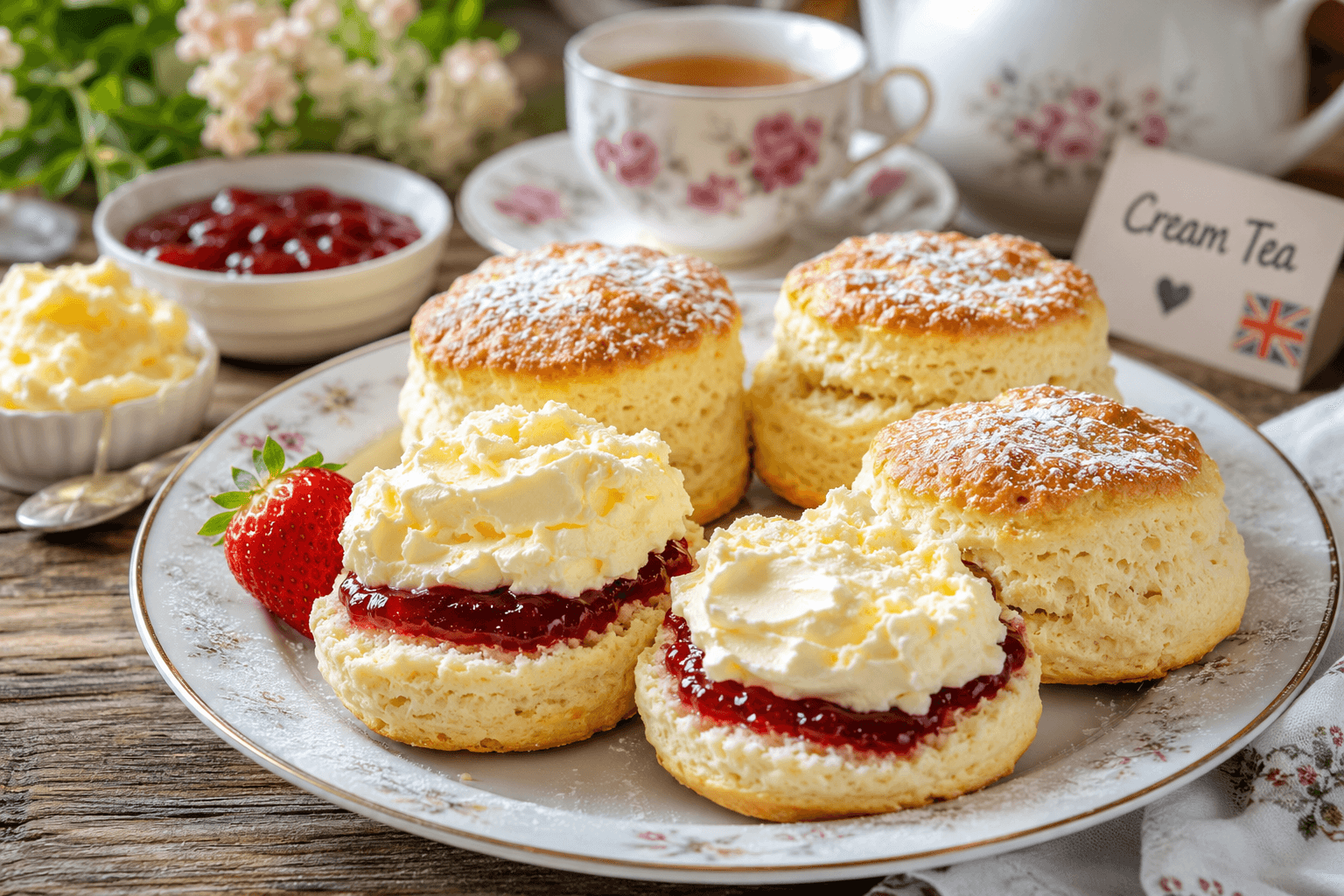
5 Cream Tea Scones with Jam & Clotted Cream – Proper British Afternoon Tea Recipe
Introduction: The Charm of British Cream Tea Scones
Cream Tea Scones are one of the most beloved traditions in British baking culture. Served warm with jam and rich clotted cream, they are the heart of a classic afternoon tea experience in the UK. Whether enjoyed in a countryside tea room or homemade in your kitchen, these scones represent comfort, tradition, and indulgence all in one bite.
In this guide, you will learn how to make perfect fluffy cream tea scones, understand their history, master baking techniques, and discover expert tips for achieving bakery-quality results at home.
What Are Cream Tea Scones?
Cream Tea Scones are soft, slightly sweet baked goods traditionally served with strawberry jam and thick clotted cream. They are a staple of British afternoon tea culture, especially in regions like Devon and Cornwall.
The British Afternoon Tea Tradition
Afternoon tea originated in the early 1840s in England and quickly became a refined social tradition. Scones became a central part of this ritual, often paired with tea, finger sandwiches, and cakes.
Pro Cooking Tips
- Keep ingredients evenly sized so they cook consistently.
- Use moderate heat for better control and more even results.
- Check the texture before removing the dish from the heat.
- Fresh serving always gives the best flavor and presentation.
Devon vs Cornwall Cream Tea Debate
There is a friendly but long-standing debate in the UK:
- Devon Style: Clotted cream is spread first, then jam
- Cornwall Style: Jam is spread first, then clotted cream
Both are delicious, and your choice depends on personal preference!
Ingredients for Cream Tea Scones
To achieve soft and fluffy scones, using the right ingredients is essential.
Dry Ingredients
- 2 cups all-purpose flour
- 2 tbsp sugar
- 1 tbsp baking powder
- ½ tsp salt
Wet Ingredients
- 1 cup cold milk (or buttermilk for extra softness)
- 1 large egg
- 4 tbsp unsalted butter (cold and cubed)
For Serving
- Strawberry or raspberry jam
- Clotted cream
- Optional: powdered sugar for dusting
Why Cold Butter Matters
Cold butter creates steam while baking, helping the scones rise beautifully and become fluffy inside with a light crumb texture.
My Experience Making This Recipe
What stood out to me most about this recipe was how reliable it became once I understood the method. The process is simple, but the final result depends on paying attention to the basics.
From my experience, small improvements in timing and seasoning can turn a good dish into a much better one.
Step-by-Step Recipe for Perfect Cream Tea Scones
Step 1: Preparing the Dough
Start by mixing all dry ingredients in a large bowl.
Important Technique
Rub cold butter into the flour mixture using your fingertips until it resembles fine breadcrumbs. This step ensures a light and airy texture.
Step 2: Adding Wet Ingredients
Slowly add milk and egg mixture to form a soft dough.
Do Not Overmix
Overworking the dough will make the scones dense. Mix just until combined.
Reader Tip / Cooking Advice
Keep the process simple and controlled. Using the right heat and not overcrowding your pan or dish can help everything cook more evenly.
Step 3: Shaping the Scones
Roll out the dough gently on a floured surface.
Cutting the Perfect Shape
Use a round cutter to create even scones. Avoid twisting the cutter, as it can prevent proper rising.
Step 4: Baking
Place scones on a baking tray lined with parchment paper.
- Bake at 200°C (392°F)
- Time: 12–15 minutes
- Until golden brown on top
Golden Rule of Baking
Do not open the oven door while baking, or the scones may collapse.
Step 5: Cooling and Serving
Let them cool slightly before slicing.
Serving Style
- Split scones in half
- Add jam first or cream first (your choice!)
- Serve with hot tea
Tips for Perfect Cream Tea Scones
Use Cold Ingredients
Cold butter and milk help create a flaky texture.
Do Not Over-Knead
Gentle handling is key for soft scones.
Use Fresh Baking Powder
Old baking powder reduces rise and makes dense scones.
Pro Tip: Brush with Milk
Before baking, lightly brush the tops with milk for a golden crust.
Variations of Cream Tea Scones
Classic Plain Scones
Traditional version with no added flavors.
Fruit Scones
Add raisins, currants, or sultanas for a sweet twist.
Cheese Scones
A savory variation popular in UK cafés.
Best Pairing Idea
Cheese scones go well with butter and chutney instead of jam and cream.
Serving Ideas for Afternoon Tea
Traditional British Setup
- Freshly baked scones
- Clotted cream
- Strawberry jam
- Black tea (Earl Grey or English Breakfast)
Modern Twist Ideas
- Add whipped cream instead of clotted cream
- Serve with herbal tea or coffee
- Use homemade fruit preserves
Common Mistakes to Avoid
Overmixing Dough
This makes scones hard instead of soft.
Wrong Oven Temperature
Too low = flat scones
Too high = burnt outside, raw inside
Skipping Rest Time
Letting dough rest briefly improves texture.
History of Cream Tea in Britain
Cream tea dates back to medieval monasteries in Devon and Cornwall. Over time, it evolved into a refined afternoon tradition enjoyed across the UK.
Evolution Over Time
- 11th–15th century: Early bread and cream traditions
- 1800s: Afternoon tea becomes fashionable
- Modern day: Cream tea is a tourist favorite in the UK
Why Cream Tea Scones Are So Popular
Comfort Food Appeal
They are warm, soft, and nostalgic.
Cultural Significance
They represent British hospitality and tradition.
Easy to Make at Home
Simple ingredients make them beginner-friendly.
Expert Baking Secrets
Use Buttermilk for Extra Softness
Buttermilk reacts with baking powder for better rise.
Chill Dough Before Baking
Resting dough improves texture and shape.
Even Thickness Matters
Roll dough evenly for uniform baking.
Golden Texture Trick
Bake on the middle rack for even heat distribution.
How to Store Cream Tea Scones
Short-Term Storage
Keep in airtight container for 2–3 days.
Freezing Option
Freeze baked scones and reheat in oven for fresh taste.
Reheating Tip
Warm at 160°C for 5–7 minutes.
Best Drinks to Pair with Scones
Traditional Options
- English Breakfast Tea
- Earl Grey Tea
Modern Options
- Cappuccino
- Herbal tea blends
- Hot chocolate
Final Thoughts on Cream Tea Scones
Cream Tea Scones are more than just a recipe—they are a symbol of British culture and tradition. With their soft crumb, golden crust, and rich toppings of jam and clotted cream, they bring a timeless experience to your table.
Whether you’re baking for family, friends, or a special afternoon tea, this recipe guarantees bakery-style results every time.
The Science Behind Perfect Scones
Understanding the baking science behind Cream Tea Scones helps you consistently achieve light, fluffy results instead of dense or dry ones.
How Baking Powder Works
Baking powder releases carbon dioxide when exposed to moisture and heat. This gas forms tiny air pockets inside the dough, making the scones rise.
Double-Acting Baking Powder
Most modern baking powders are double-acting:
- First reaction happens when mixed with liquid
- Second reaction occurs in the oven
This ensures a strong, even rise.
Why Gluten Control Matters
Gluten is formed when flour is mixed with liquid. Too much gluten makes scones tough.
How to Control Gluten
- Mix gently
- Avoid over-kneading
- Use soft flour if possible
The goal is to create a tender crumb, not chewy bread.
Choosing the Best Ingredients for Cream Tea Scones
Quality ingredients make a huge difference in taste and texture.
Flour Selection
All-purpose flour works best, but pastry flour can create even softer scones.
Why Protein Content Matters
Lower protein = softer texture
Higher protein = firmer, bread-like structure
Butter Quality
Use high-fat unsalted butter for best results.
European-Style Butter Advantage
It contains more fat and less water, making scones richer and more tender.
Milk vs Buttermilk
Both work well, but they create slightly different textures:
- Milk: Light and classic taste
- Buttermilk: Tangy flavor and softer crumb
Advanced Baking Techniques for Bakery-Style Scones
The Folding Technique
Instead of kneading, gently fold the dough over itself 2–3 times.
Why Folding Works
It creates layers, similar to puff pastry, helping the scones rise higher.
Resting the Dough
Let the dough rest for 10–15 minutes before cutting.
Benefits of Resting
- Hydrates flour evenly
- Reduces gluten tension
- Improves softness
Steam Baking Method
Professional bakeries sometimes use steam in ovens.
How It Helps
Steam keeps the crust soft initially, allowing maximum rise before crust formation.
Regional Variations of Cream Tea Scones in the UK
Devon Scones Style
- Cream first
- Jam second
- Slightly richer texture
Cornish Scones Style
- Jam first
- Cream on top
- Slightly lighter and sweeter profile
Scottish Scone Variation
Scottish scones are often:
- Smaller
- Thicker
- Less sweet
- Served with butter instead of cream
How Cafés in the UK Make Perfect Scones
Many British cafés follow professional baking standards to maintain consistency.
Batch Preparation Method
Large batches are made early in the morning and baked fresh throughout the day.
Why Freshness Matters
Scones taste best within 2–4 hours of baking.
Temperature Control
Professional ovens maintain precise heat levels.
Ideal Baking Conditions
- Even heat circulation
- No direct bottom heat
- Controlled humidity
Creative Serving Ideas for Cream Tea Scones
While traditional jam and clotted cream remain classic, modern variations are becoming popular.
Luxury Afternoon Tea Upgrade
Add:
- Lemon curd
- Fresh berries
- Whipped mascarpone
Chocolate-Inspired Scones
Some bakeries now serve:
- Chocolate chip scones
- Cocoa scones with raspberry jam
- Nutella-filled scones
Seasonal Variations
Spring Version
- Strawberry jam
- Edible flowers
Autumn Version
- Apple cinnamon jam
- Spiced clotted cream
Winter Version
- Orange marmalade
- Warm spiced tea pairing
Hosting a Traditional British Afternoon Tea
Cream Tea Scones are often part of a larger experience.
Essential Components
- Finger sandwiches
- Scones with jam and cream
- Cakes and pastries
- Tea selection
Tea Selection Guide
Best Traditional Teas
- Earl Grey (floral and citrusy)
- English Breakfast (strong and bold)
- Assam (malty and rich)
Presentation Tips
- Use tiered cake stands
- Serve on fine porcelain plates
- Add linen napkins for elegance
Troubleshooting Common Scone Problems
Problem: Scones Too Flat
Causes
- Old baking powder
- Overmixing
- Warm butter
Solution
Use fresh ingredients and keep butter cold.
Problem: Scones Too Dry
Causes
- Too much flour
- Overbaking
Solution
Measure ingredients accurately and reduce baking time slightly.
Problem: Scones Too Dense
Causes
- Over-kneading
- Not enough baking powder
Solution
Mix gently and ensure correct leavening.
Nutrition Overview of Cream Tea Scones
While indulgent, scones can be enjoyed in moderation as part of a balanced diet.
Basic Nutritional Profile (per scone)
- Calories: Moderate
- Carbohydrates: High
- Fat: Medium (from butter and cream)
- Protein: Low
Healthier Alternatives
- Use whole wheat flour
- Replace sugar with honey
- Use low-fat milk
Why Homemade Scones Taste Better Than Store-Bought
Freshness Factor
Homemade scones are baked fresh with no preservatives.
Ingredient Control
You choose:
- Quality of butter
- Type of flour
- Sweetness level
Texture Advantage
Store-bought scones are often dry or overly processed.
Cultural Importance of Cream Tea in the UK
Cream tea is more than food—it is a cultural ritual.
Social Tradition
It is commonly enjoyed:
- In afternoon gatherings
- At tea rooms
- During celebrations
Tourism Connection
Visitors to the UK often seek authentic cream tea experiences in historic tea houses and countryside cafés.
Final Master Tips for Perfect Cream Tea Scones
Top 5 Expert Secrets
- Always use cold ingredients
- Never overwork dough
- Bake immediately after cutting
- Use high-quality jam and cream
- Serve warm for best taste
Conclusion: The Timeless Joy of Cream Tea Scones
Cream Tea Scones represent the heart of British baking tradition. Their soft, fluffy texture combined with sweet jam and rich clotted cream creates a perfect harmony of flavors.
Whether enjoyed in a traditional UK tea room or freshly baked at home, they offer comfort, elegance, and nostalgia in every bite.
With the right techniques, ingredients, and care, you can easily recreate authentic bakery-style scones that rival any café in Britain.
Master-Level Baking Guide for Cream Tea Scones
To truly master Cream Tea Scones, it helps to understand professional bakery techniques used in high-end British tea rooms.
Understanding Dough Hydration
Dough hydration refers to how much liquid is in your mixture compared to flour.
Ideal Hydration Level for Scones
Scone dough should be:
- Soft
- Slightly sticky
- Not runny
If it feels too dry, add milk one tablespoon at a time.
If it feels too wet, sprinkle a small amount of flour—but avoid overdoing it.
Temperature Control in Baking
Temperature plays a huge role in scone texture and rise.
Why High Heat is Important
A hot oven creates a rapid “oven spring,” which is the sudden rise in the first few minutes of baking.
- Low heat = flat scones
- High heat = tall, fluffy scones
Best Baking Temperature
200°C (392°F) is ideal for consistent golden results.
The Role of Fat in Cream Tea Scones
Fat is one of the most important elements in achieving soft, rich scones.
Butter Distribution Technique
Cold butter should be evenly distributed in tiny pieces throughout the flour.
What Happens During Baking
- Butter melts
- Steam is released
- Layers form inside the dough
This creates the signature flaky texture.
Alternative Fats You Can Use
While butter is traditional, some variations include:
Vegetable Shortening
- Produces very soft texture
- Less flavor than butter
Coconut Oil
- Adds slight tropical aroma
- Works best in vegan scones
Professional Presentation of Cream Tea Scones
Presentation is a major part of the British afternoon tea experience.
How Tea Rooms Serve Scones
In traditional UK tea rooms, scones are often:
- Served on tiered stands
- Accompanied by fine china
- Presented warm in linen-lined baskets
Plating Techniques at Home
You can recreate café-style presentation easily.
Simple Elegant Setup
- Place scones on a wooden board or ceramic plate
- Add small bowls of jam and cream
- Garnish with fresh berries or mint leaves
Flavor Pairing Science for Scones
Pairing flavors correctly enhances the overall experience.
Classic Pairings
- Strawberry jam + clotted cream
- Raspberry jam + black tea
- Apricot jam + Earl Grey tea
Modern Flavor Pairings
Fruity Combinations
- Blueberry jam + lemon zest cream
- Blackberry jam + vanilla whipped cream
Savory Pairings
- Cheese scones + butter + chutney
- Herb scones + soft cheese spreads
Advanced Ingredient Substitutions
If you want to modify the recipe, here are professional substitutions:
Gluten-Free Version
- Replace flour with gluten-free baking mix
- Add ½ tsp xanthan gum for structure
Vegan Cream Tea Scones
- Replace butter with vegan margarine or coconut oil
- Use almond or oat milk
- Replace clotted cream with coconut whipped cream
Low-Sugar Version
- Reduce sugar by half
- Use natural sweeteners like honey or maple syrup
Why Clotted Cream is Essential
Clotted cream is what makes Cream Tea Scones truly British.
What is Clotted Cream?
It is a thick, rich cream made by slowly heating full-fat cow’s milk.
Texture Characteristics
- Thick like butter
- Slightly grainy texture
- Rich, buttery flavor
Clotted Cream vs Whipped Cream
| Feature | Clotted Cream | Whipped Cream |
|---|---|---|
| Texture | Thick & dense | Light & airy |
| Flavor | Rich & buttery | Sweet & mild |
| Authenticity | Traditional UK | Modern substitute |
How to Make Scones Look Bakery-Perfect
Appearance matters when aiming for professional-quality scones.
Golden Color Tips
Brush tops with:
- Milk
- Egg wash
- Or cream
This creates a glossy golden finish.
Shape Consistency
Use a round cutter for uniform size.
Pro Tip
Do not twist the cutter—press straight down to ensure proper rise.
Storage and Shelf Life Optimization
Scones are best fresh, but proper storage extends quality.
Short-Term Storage
- Store in airtight container
- Keep at room temperature
- Consume within 48 hours
Long-Term Storage (Freezing Method)
Freezing Steps
- Let scones cool completely
- Wrap individually in cling film
- Store in freezer bag
Reheating Method
- Bake at 160°C for 5–7 minutes
- Or microwave for 20–30 seconds
How British Tea Culture Influences Scones
Cream Tea Scones are deeply tied to British identity.
Tea as a Social Ritual
Tea time is not just about drinking tea—it is about:
- Conversation
- Relaxation
- Hospitality
Role in Modern UK Lifestyle
Even today, scones remain:
- Café bestsellers
- Afternoon tea staples
- Holiday favorites
Seasonal Tea Experiences with Scones
Spring Tea Parties
- Light fruit scones
- Floral decorations
- Fresh berry jams
Summer Garden Tea
- Iced tea pairing
- Lemon-flavored scones
- Outdoor serving setups
Autumn Tea Comfort
- Spiced scones (cinnamon, nutmeg)
- Apple jam
- Warm indoor settings
Winter Tea Luxury
- Rich fruit scones
- Orange marmalade
- Hot strong tea blends
Expert Baker Insights
Professional bakers often follow strict rules for consistency.
Consistency Rule
Every scone must be:
- Same weight
- Same thickness
- Same baking time
Batch Baking Strategy
Large bakeries:
- Prepare dough in bulk
- Cut scones quickly
- Bake immediately to maintain rise
Final Deep Insight: Why This Recipe Works Every Time
The success of Cream Tea Scones depends on three scientific principles:
1. Temperature Control
Cold butter + hot oven = perfect rise
2. Minimal Gluten Development
Less mixing = softer texture
3. Proper Leavening
Fresh baking powder = strong lift
Conclusion: The Art of Perfect Cream Tea Scones
Mastering Cream Tea Scones is not just about following a recipe—it is about understanding tradition, technique, and precision.
When done correctly, you achieve:
- Golden crisp tops
- Soft fluffy interiors
- Perfect balance of jam and clotted cream
This timeless British treat continues to bring people together, whether in countryside tea rooms or modern kitchens around the world.
Final Thoughts
Simple recipes often become favorites because they are easy to make and easy to enjoy. This one is a good reminder that strong flavor can come from straightforward cooking.
Try it once, then build confidence by refining it with your own style.